
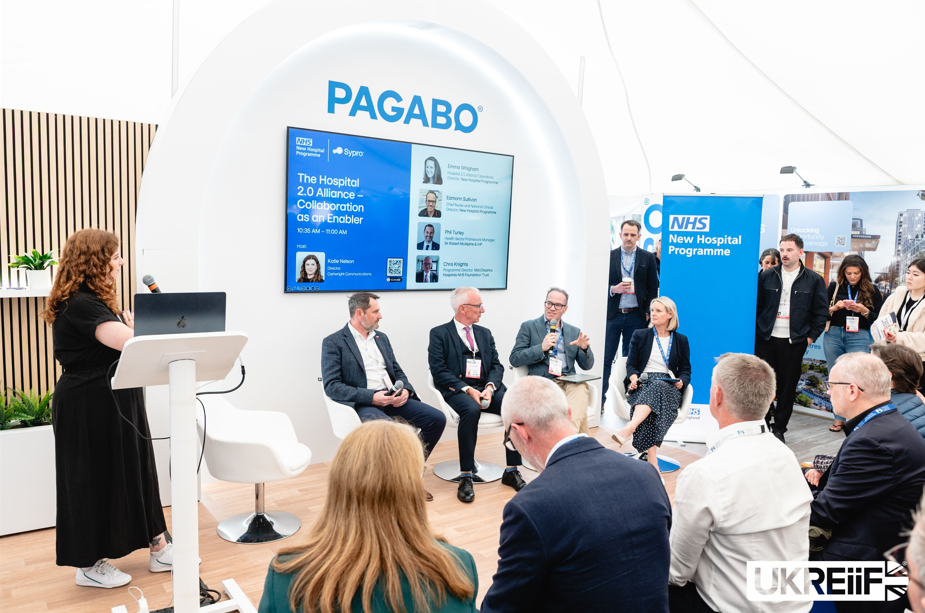
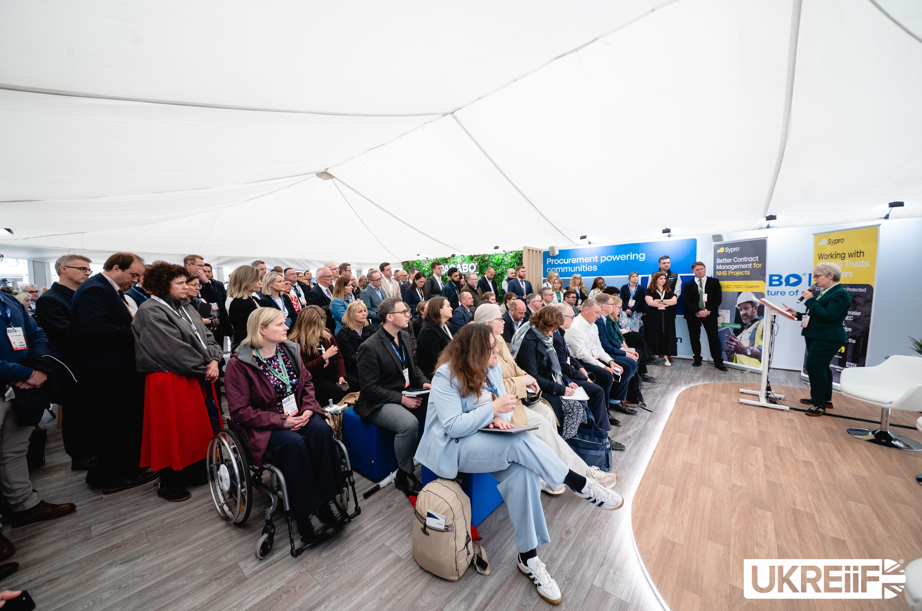
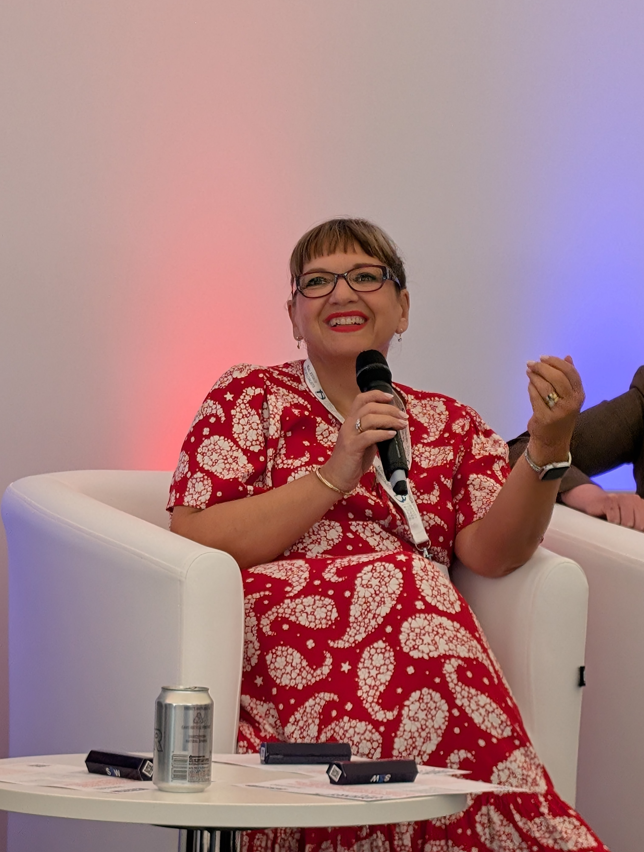
UKREiiF 2026 brought together NHS leaders, Trusts, clinicians, government and industry partners for a series of conversations about the future of healthcare infrastructure — and how the NHS delivers hospitals differently for the future.
At the centre of the day was the New Hospital Programme’s dedicated two-hour session, which explored collaboration, industrialisation, digital transformation, and the role infrastructure plays in improving patient and staff experience.
The session opened with Minister Smyth reaffirming the Government’s commitment to rebuilding RAAC hospitals and supporting delivery through the New Hospital Programme.
From the outset, the discussion felt grounded in operational reality rather than theory. Trust leaders and clinicians spoke openly about the challenges of working in ageing estates, the impact that has on patient care and staff experience, and the responsibility to create environments that are safer, modern and better equipped for the future of the NHS.
Chris Knights captured the scale of opportunity around Leighton particularly powerfully, describing the excitement locally around what this level of investment could mean for both patients and staff. Conversations around single rooms, patient privacy and clinical environments brought a clear reminder that these discussions are ultimately about the experience people have within healthcare settings every day. That connection between infrastructure and outcomes carried through almost every discussion across the session. Whether the subject was industrialisation, digital systems or alliancing models, the recurring focus was on creating hospitals that are safer, more efficient to operate and better connected from the outset.
The conversations around industrialisation reflected how much the discussion has evolved in recent years. There was less focus on terminology and far more attention on practical delivery – early engagement, repeatable approaches, clinical input at design stage and learning carried from one wave into the next.
Dan Gallagher noted the importance of engagement from RIBA Stage 1 onwards, ensuring products, systems and delivery approaches are shaped collaboratively from the beginning. There was also strong recognition that Wave 1 should establish foundations that continue to improve over time, rather than treating each scheme in isolation. Emily King reflected on industrialisation from a patient perspective, highlighting that when hospitals work well, most people should never need to think about the systems and processes behind them. The focus should remain on safer, smoother, and more effective care.
The same practical approach carried through the digital transformation discussions.
Rather than focusing on technology for its own sake, conversations centred on how intelligent hospitals could improve operational flow, support staff decision-making and create more joined-up experiences for patients. Sarah Thomas, Kay Mulcahy and Chris Booth explored how digital, clinical and estates strategies need to work together from the outset, including how hospitals manage admission, transfer and discharge processes, operational decision-making and actionable data.
There was also strong recognition that transformation cannot stop at new hospitals alone. Legacy estate must remain part of the wider journey. Kay Mulcahy spoke about the importance of avoiding a “two-tier estate” and ensuring digital maturity, workforce capability and operational improvement are considered across the wider NHS estate, not only within new builds.
Chris Booth discussed the value of cross-scheme collaboration between Wave 1 trusts, including shared approaches to pilots, prioritisation, and transition planning – helping trusts benefit from collective learning rather than working independently.
The closing discussion between Doug Baldock and Eamonn Sullivan brought many of the day’s themes together. Doug reflected on the work already completed to create the foundations for delivery and the opportunity for industrialisation to strengthen UK manufacturing capability over future waves. Eamonn spoke about future-proofing healthcare through digital capability, operational effectiveness, and patient outcomes, alongside the ambition for the UK to deliver some of the best hospitals anywhere in the world.
Alongside the dedicated New Hospital Programme session, colleagues from across the programme contributed to discussions throughout UKREiiF on public value, circular construction, healthcare investment, platform-led design, and alliancing across national infrastructure. Dr Abbie Romano joined discussions with Saint-Gobain and RICS on early engagement and modern methods of construction, focusing on scalable approaches to public sector delivery.
Cheryl Riotto contributed to conversations around healthcare property and investment alongside leaders from BlackRock, Civitas, Kajima and Downing while Natalie Forrest joined senior leaders from government, combined authorities, and academia to discuss how public value is defined within major social infrastructure programmes.
Emma Whigham participated in discussions on circular construction with Skanska before later joining a panel focused on the Hospital 2.0 Alliance and collaborative delivery models.
Emily King joined Kier’s discussion on platform-led design and phased delivery alongside Fiona Daly and Sir Jonathan Van-Tam, while Doug Baldock joined wider infrastructure leaders from transport and construction sectors to discuss alliancing and long-term programme delivery across national infrastructure.
Taken together, the conversations throughout the day reflected how the New Hospital Programme is transforming the way hospitals are designed, built and operated for the future of the NHS. Across every discussion, the focus repeatedly returned to the same thing: creating better environments for patients and staff, supporting safer care and giving NHS teams the buildings and systems they need for the future.