
Manufacturing Excellence: Glovebox work underway at Ansaldo

Following the progress update on SRP’s glovebox lines on our recent PPP townhall, and the spotlight on our supply partner NIS, we’re now focusing on the work of Ansaldo in Wolverhampton, where the group 300 and 500 glovebox lines are being manufactured for our Sellafield Product and Residue Store Retreatment Plant (SRP).

System 501 of the group 500 glovebox line.

The group 300 line is a powder retreatment line made up of 12 gloveboxes as part of 7 contained systems. This 25-metre-long line will be pivotal in retreating around 2,000 SNM packages.

The group 500 line is a residues retreatment line. This line is 41-metres-long, made up of 16 gloveboxes, and will be responsible for retreating around 6,000 SNM packages.

The group 500 line is the current focus. Factory Acceptance Testing (FAT) has been completed by Ansaldo, and equipment is now being transferred to our commissioning team in stages. The first Custody Transfer Certificate (CTC) has already handed over electrical distribution equipment, allowing the team to begin energisation of the plant in a controlled manner.

Batch furnace legs, part of the 23 meter glovebox line.
System 505 and 508 of the 500 glovebox line.

Paul Carson-Clements, Commissioning section lead said: “Applying isolations was a key part of this work.

“It allowed us to demonstrate safe control of the systems, even while work continued downstream. My role was to oversee this process, keeping our team on schedule while working safely.”

The glovebox lines are designed to open, treat and repackage SNM packages, or cans, which will then be placed into long-term safe storage at Sellafield. Each line uses mainly automated processes, supported by operator input where required. Tools involved include package cutting, de-pressurising, repackaging and welding equipment.

Commissioning work is critical in proving the systems will do what they need to do, are safe and ready for arrival on site. Isolations and permits provide assurance to both PPP and Ansaldo that risks are understood and controlled before energisation.

The gloveboxes have been in manufacture and testing at Ansaldo for nearly two years, with transfers to PPP beginning three months ago. Despite the challenges of integrating into an established Sellafield process, cooperation between the teams has ensured progress has been safe and effective.

Looking ahead, energisation of the Group 500 line is planned to begin this month. This will see integration of supervisory control and data acquisition (SCADA) and programmable logic control (PLC) systems by the control systems team, marking a major step forward. As further equipment will be brought under PPP control, paving the way for input output checks and single item operations.

System 00 Package delivery.


Group 500 glovebox line.

Altrad are SRP’s Safety Energy contractor of the month

The Altrad team on SRP.

Congratulations to Altrad, this month’s Safety Energy contractor of the month on our Sellafield Product and Residue Store Retreatment Plant (SRP) project. The award was presented by Jon Muir, SRP construction manager.

Altrad earned this recognition for their open and honest approach to safety. The team used a section of the recent PPI Stand Down to reflect on a managerial failure elsewhere on site that led to a near miss, sharing key lessons and outlining what is now being done differently to prevent it from happening again.

This level of transparency and learning demonstrates Altrad’s commitment to safety and their proactive attitude to maintaining high standards on site.

Jon Pyne, Altrad senior project manager, said:

“I’m proud of the team for stepping up and showing leadership during the PPI Stand Down. We didn’t shy away from a difficult conversation, we used it to reinforce our commitment to learning, raising standards, and most importantly, keeping people safe.

“Everyone on our team has a role to play in driving safety forward, and this award is a credit to their efforts.”

Well done to everyone involved.

SRP stand down reinforces importance of PPI

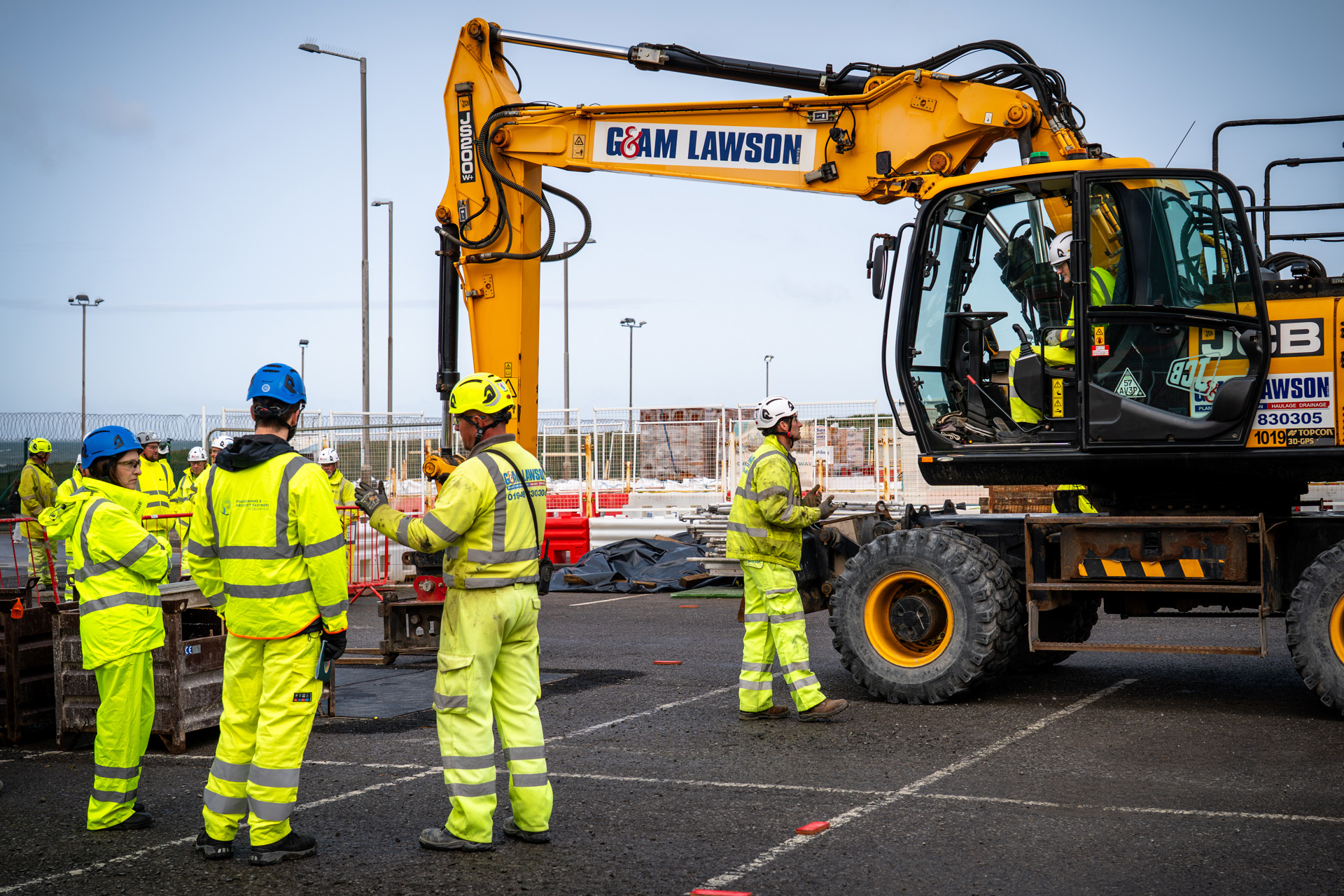
Andrew Lawson (centre) discussing the Spillard PPI system to the machine driver.

In an industry where people and machinery operate side-by-side every day, reinforcing the importance of the People Plant Interface (PPI) Life Saving Principle is essential to keep us Knowingly Safe.

Recently, our Sellafield Product and Residue Store Retreatment Plant (SRP) project team paused operations for a Safety Stand Down, focusing on PPI, bringing together teams from across our supply chain to focus on staying safe around plant and equipment.

Companies across the project set up practical PPI stations, with live demonstrations of operations, showcasing systems, technologies, and behaviours used to manage and mitigate PPI risks, in line with our PPI campaign.

From spotter communication methods to proximity sensor demonstrations, each session offered hands-on, real-world insights into preventing harm where it matters most.

Andrew Lawson was demonstrating the Spillard PPI system which helps reduce plant-related risks by alerting both vehicle operators and personnel when they are in proximity to moving equipment.

He said: “The most important thing to me about PPI as a plant operator is people sticking to footpaths and not encroaching on work areas. People can sometimes come into areas that they don’t need to be in. Stick to the footpaths and you won’t come into contact with the plant.”

Contractor-led PPI stand down

Mark Atkinson, SRP health & safety manager, said: “To enhance site safety and operational understanding, the SRP People Plant Interface (PPI) Safety Stand Down was organised with a strong emphasis on being contractor-led, ensuring that the valuable expertise and real-world experience of our plant operators and contractors were at the forefront.

“The day focused on engaging directly with those who work daily with plant machinery, using their insights to identify key interface risks, share best practices, and develop practical solutions for improving safety around plant operations.

“Refresher training, demonstrations, and open-floor discussions allowed contractors to lead the conversation, demonstrating best practice whilst giving voice to those most affected by PPI challenges.

“Recognising the size and influence of our management team, we also arranged for a plant simulator to be positioned on site for two days. This provided non-operational staff with a hands-on opportunity to experience the challenges of operating heavy machinery within the constraints of a tight, live construction site.

“The simulator exercise significantly improved empathy and understanding of the spatial awareness, concentration, and skill required to operate plant safely in dynamic environments. This is understanding is key for safely planning future works.

“The Stand Down promoted collaboration, strengthened relationships between management and site teams, whilst reinforcing our commitment to safety through mutual respect and shared learning.

“I would personally like to thank everyone involved with the Stand Down.”

Close proximity working

Greg Doran, SRP SHE lead, added: “Following the Stand Down, the SRP leadership team took the opportunity to mandate close proximity working by exception only, for example, for specific and very necessary reasons and this will be implemented from 9 June.

“The reason for the mandate is to discourage people from defaulting to close proximity working initially; instead, we believe people and plant should be separated wherever possible.

“However, we also recognise that there will be exceptions where people and plant need to interface due to the nature of the task.”

Steve Harnwell, delivery director, said: “On busy construction sites, like SRP, where we are doing 5.2 million hours of high hazard construction work, one of the biggest risks to people is moving machinery, whether you are using it or are a pedestrian on the site.

“It’s important to follow our Life Saving Principle for PPI. We have segregated walkways to protect people from moving vehicles but, equally, if you are involved in the work, it’s important to follow the rules around the safety measures that we put in place.”

Hands-on approach works for Steven

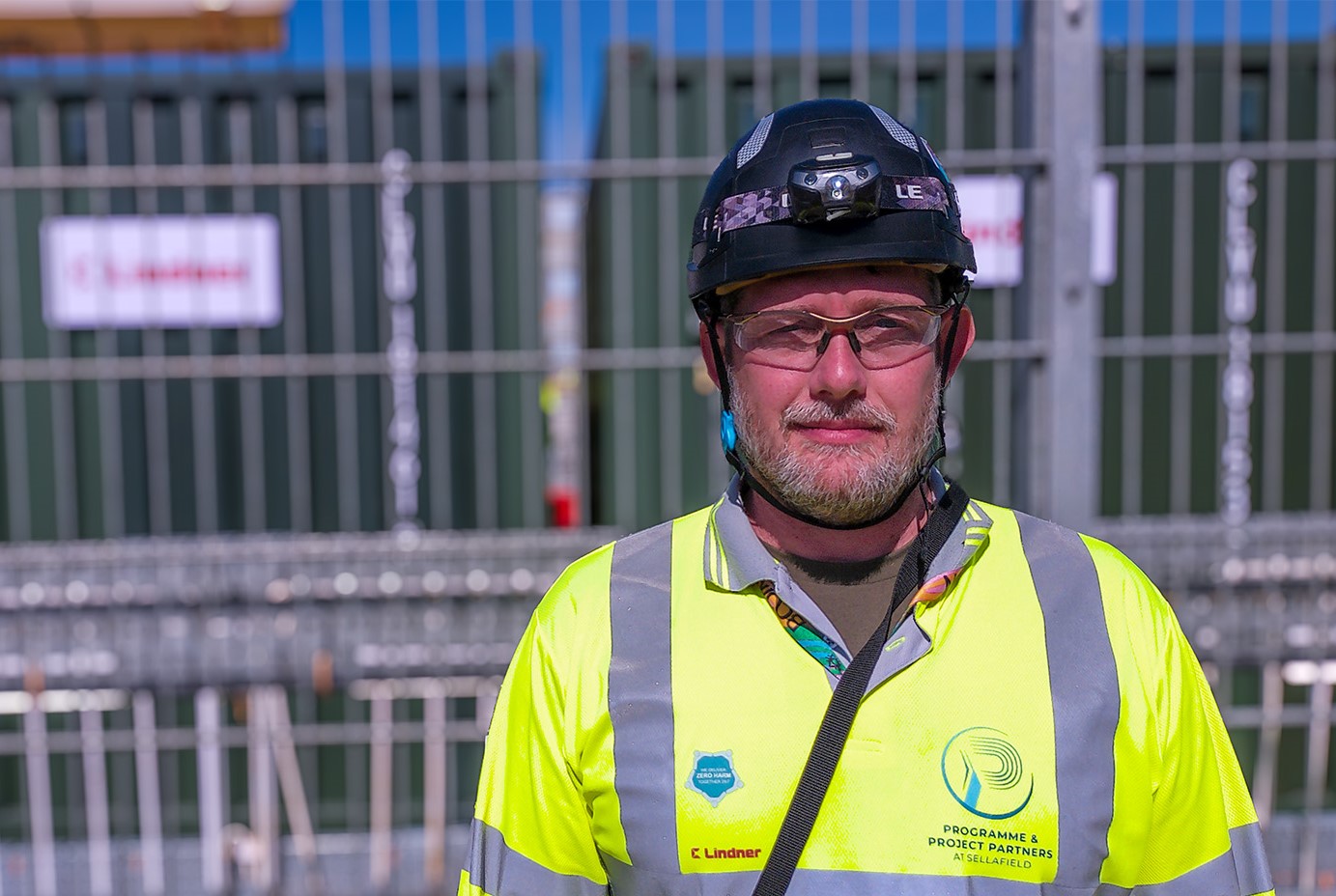
Steven Boyd, Lindner supervisor

A supervisor our Sellafield Product and Residue Store Retreatment Plant (SRP), takes pride in leading his team through site work with a hands-on and proactive approach.

Coming from a military background, Steven Boyd, who works for Lindner, brings a disciplined and structured mindset to supervising his team of 16, including both experienced tradesmen and apprentices.

For Steven, leadership means being involved and solution-focused. He works closely with his team to address challenges head-on, finding solutions rather than focusing on problems.

Steven said: “It is all about tackling new tasks and working out solutions together.

“I like being involved in the details and making sure we find the best way forward.”

One of Steven’s key strengths is his ability to connect with people from diverse backgrounds. Drawing from his military experience, he knows the value of teamwork and effective communication.

He added: “It is definitely beneficial to have people from different walks of life on the team. Everyone has their own perspective, and that variety helps us work better together.”

Coordinating manpower, and dealing with overlapping tasks from various contractors, can be challenging on site. Despite this, Steven maintains a positive outlook, focusing on planning and communication to keep the work moving smoothly.

Pride in project

Steven is proud to be part of a multi-million pound decommissioning project that makes Sellafield safer for the public.

He said: “I am proud to be involved in a project that is making a difference to safety on such a large scale.”

Steven’s dedication to professional growth is clear. Recently, he achieved his construction site management level 6 qualification, supported by Lindner. He encourages others to keep pushing forward, adding:

“Take every opportunity to get qualified. Show interest, and people here will help you progress.”

His approach reflects what Proud to Lead is all about: commitment to safety, continuous improvement, and leading by example.

Read more of our Proud to Lead stories on the following links:

Proud to lead: Celebrating our supervisors on PPP – Sellafield

Proud to lead: Celebrating our supervisors – Sellafield

Matt makes a lasting impact at PPP – Sellafield

Weathertight! Major milestone hit for SRP

Weathertight milestone - final roof pour on SRP

The final concrete pour on the roof slab of our Sellafield Product and Residue Store Retreatment Plant (SRP) process building has been completed. The latest achievement, for one of the site’s largest and most complex infrastructure projects, means the main building is now fully weathertight.

John Leslie, SRP project director, said: “I’m delighted we’ve reached another pivotal moment in the delivery of SRP, and I want to congratulate the team on their latest achievement.

“This is an extremely complex major project to deliver, and through our PPP delivery model we have collaborated with our supply chain partners Kier, Severfield and Mammoet to achieve another significant step forward.

“Delivering projects of this scale and keeping them on track, while keeping everyone safe, is no mean feat and is thanks to the collaboration and professionalism demonstrated everyday by hundreds of people across our supply chain all striving for excellence.”

Facts and figures

To complete this latest milestone, over 2,700 cubic metres of concrete from Sellafield’s new on-site batching plant was poured, pumped up to a height of 30 metres, over a 12-week period to complete the roof slab. Now the process building is weathertight, the facility’s internal and mechanical fit-out will progress, pushing the project closer to its active commissioning and operations in support of the government’s plutonium disposition strategy announced earlier this year.

Louis Twentyman, a graduate of PPP’s internship scheme and now a site engineering apprentice on the project, said: “It’s amazing to be part of a project the scale of SRP, and one with such an important role in the site’s decommissioning.

“Not everyone gets to work on projects of this stature and where there’s something interesting and exciting happening every day. It’s amazing seeing it progress and to be part of it all – I can’t wait to say I helped to build that.”

Confidence

The project is one of only a handful of the country’s major infrastructure projects to hold a ‘green’ delivery confidence rating from the Infrastructure and Projects Authority (IPA), the government’s centre of expertise for infrastructure and major projects.

Once commissioned, SRP will safely receive special nuclear material packages from existing storage locations across the Sellafield site before retreating them into new 100-year packages for safe storage. The SRP facility will enable all special nuclear material to remain safe and secure in its store into the next century and beyond and, therefore, plays a key role in delivering Sellafield’s purpose to create a clean and safe environment for future generations.

For more on this story go to: Flagship Sellafield project seals major milestone – GOV.UK.

Congratulations to everyone involved.

SRP Safety Energy Contractor of the Month: Severfield

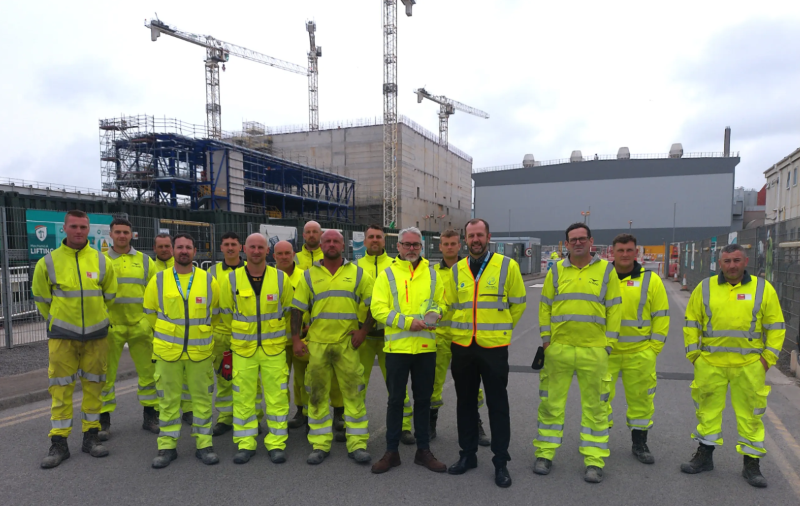
Severfield are this month's Safety Energy Contractor of the Month on SRP: Front - left to right: Simon Clarkson, SRP health and safety advisor, Severfield's Karl Hine, senior SHE advisor, and John Dunleavey, SHE advisor, and the proud Severfield workforce on SRP.
Severfield are this month’s Safety Energy Contractor of the Month on SRP: Front – left to right: Simon Clarkson, SRP health and safety advisor, Severfield’s Karl Hine, senior SHE advisor, and John Dunleavey, SHE advisor, and the proud Severfield workforce on SRP.

Our long-term steelwork supply partner Severfield has been announced as this month’s safety energy contractor of the month on our Sellafield Product and Residue Store Retreatment Plant (SRP) project.

Severfield has delivered an excellent Safety Energy performance, showing a consistent commitment to high standards. Their response to a recent incident and follow-up engagement was exemplary, demonstrating a proactive and responsible approach to safety.

The team also supported the recent SHEQ conference, supplying MEWPs to assist with event setup, and have gone above and beyond expectations by procuring powered air purifying respirators for their own supply chain, exceeding existing standards.

A big thank you and congratulations to Severfield for setting the bar high and leading by example.

Karl Hine, Severfield senior SHE advisor, said: “Being awarded the safety energy contractor of the month is a huge accolade for Severfield and one that we have celebrated as a team.

“Since the introduction of safety energy, we have always set ourselves high targets and used them as a driving force to improve as a team on the PPP projects.

“I am really proud of the team’s commitments and effort to enable us to achieve these targets. This award is for the team, not me, as I set the targets. It’s our workforce and management team who put the effort into achieving them.

“I look forward to our next phase with safety energy where we will measure the impact of our data and push our targets up again.”

To see the previous winner, click here.

Scaffold removal is underway on SRP

SCP scaffold removal is underwayWork has begun on removing the external scaffold which encloses the reinforced concrete box on the Sellafield Product and Residue Store Retreatment Plant (SRP).
This began at the northeast corner and is progressing around to the west, with two lifts of scaffold being removed at a time. Scaffold boards and tubes are carefully dismantled, stockpiled, and lowered to the ground by the site lifting team, using the four tower cranes.

The scaffold strip is being carried out by Enigma Scaffolding, on behalf of Kier, and is critical for the programme of external works, particularly the interface with adjoining structural steelwork.

The work has been carefully co-ordinated to allow completion of the reinforced concrete roof, finishing of the external concrete walls, and welding of steel brackets on the east.

The scaffold strip will continue sequentially on all sides of the SRP structure through to summer 2025.

Sandy Basso, construction co-ordinator, said: “The works have been progressing well with a strong emphasis on safety. Exclusion zones are set up and checked before work starts, and operations are well controlled with clear communication between teams and scaffolders above.

“Radios are used to ensure safe access, and there is excellent co-ordination between scaffolders and the Mammoet crane gang during lifting operations.

“We have a good set of lads carrying out the work. They are all briefed before starting, fully understand their roles and responsibilities, and put safety first.”

Kier rewarded for commitment to safety on SRP

SRP safety energy award was presented by Rob Seale, senior project manager (left), to James Wotherspoon, Kier construction manager.

Congratulations to Kier, part of our supply chain, as they are awarded this month’s safety energy contractor of the month on our Sellafield Product and Residue Store Retreatment Plant (SRP).

They won this for achieving 100% safety energy and demonstrating an outstanding commitment to safety.

The award was presented to James Wotherspoon, Kier construction manager, by Rob Seale, senior project manager, recognising Kier’s proactive approach to driving observations, team engagement, and their positive response to a recent unplanned event.

James Wotherspoon said: “This award reflects the dedication of our team to maintaining a safe and proactive working environment. Achieving 100% safety energy is a testament to the engagement and commitment of everyone on site.

“We will continue to build on this success and keep safety at the heart of everything we do.”

Well done to Kier for leading by example and keeping safety front and centre.

Tower crane dummy rescue drill goes smoothly

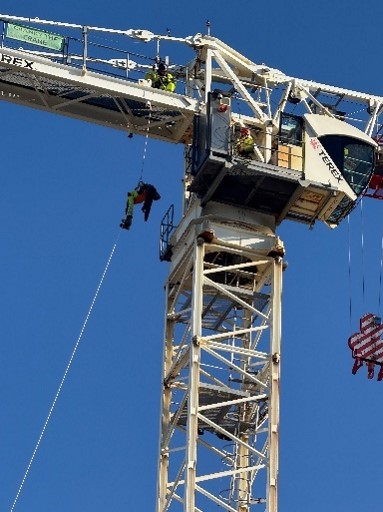
Dummy rescue drill from a tower crane on SRPMammoet operatives at our Sellafield Product and Residue Store Retreatment Plant (SRP) recently conducted a controlled dummy rescue exercise, using REAX self-descender equipment, to simulate an emergency evacuation from a tower crane.
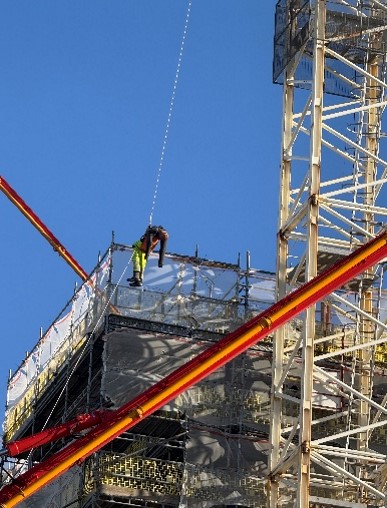
The drill involved carefully lowering a weighted dummy from the crane, while ensuring stability and control throughout the descent. To manage the speed of descent, and minimise potential acceleration, the team use a Milan hoist which was secured to an anchor point above the casualty’s head.

The team also use a guide rope, this method provides additional stability and guides the casualty away from any structures below.

During the operation, a Mammoet operative, positioned below, played a key role in guiding the dummy safely down through an active worksite, navigating between two concrete pumps, positioned approximately 20 metres apart.

The descent was deliberately slowed to reduce momentum, ensuring a controlled and safe landing. Once on the ground, the Mammoet team efficiently removed the REAX rescue equipment, preparing the site for emergency services to take over.

Regular drills

Dummy rescue drill from tower crane on SRPMammoet operatives regularly carry out rescue demonstrations at least four times per year. After each drill, the team conducts a debrief to assess areas for improvement.
A previous exercise highlighted that the rescue rope had snagged on scaffolding due to the wind, costing valuable time. In response, the team suggested using a guide rope in a dropped bag rather than manually lowering the rope.

This was the first time the dropped bag method was used, and it successfully saved three to four minutes on the rescue operation.

Dean Clark, site manager, praised the Mammoet operatives for their professionalism during the exercise: “This drill demonstrated the skill and precision of the team in executing a controlled rescue from the tower crane. Their focus on safety, stability, and efficiency ensured the exercise was completed in just three minutes.

“It’s a testament to their training, teamwork, and commitment to maintaining the highest safety standards on site.”

Proud to lead: Celebrating our supervisors

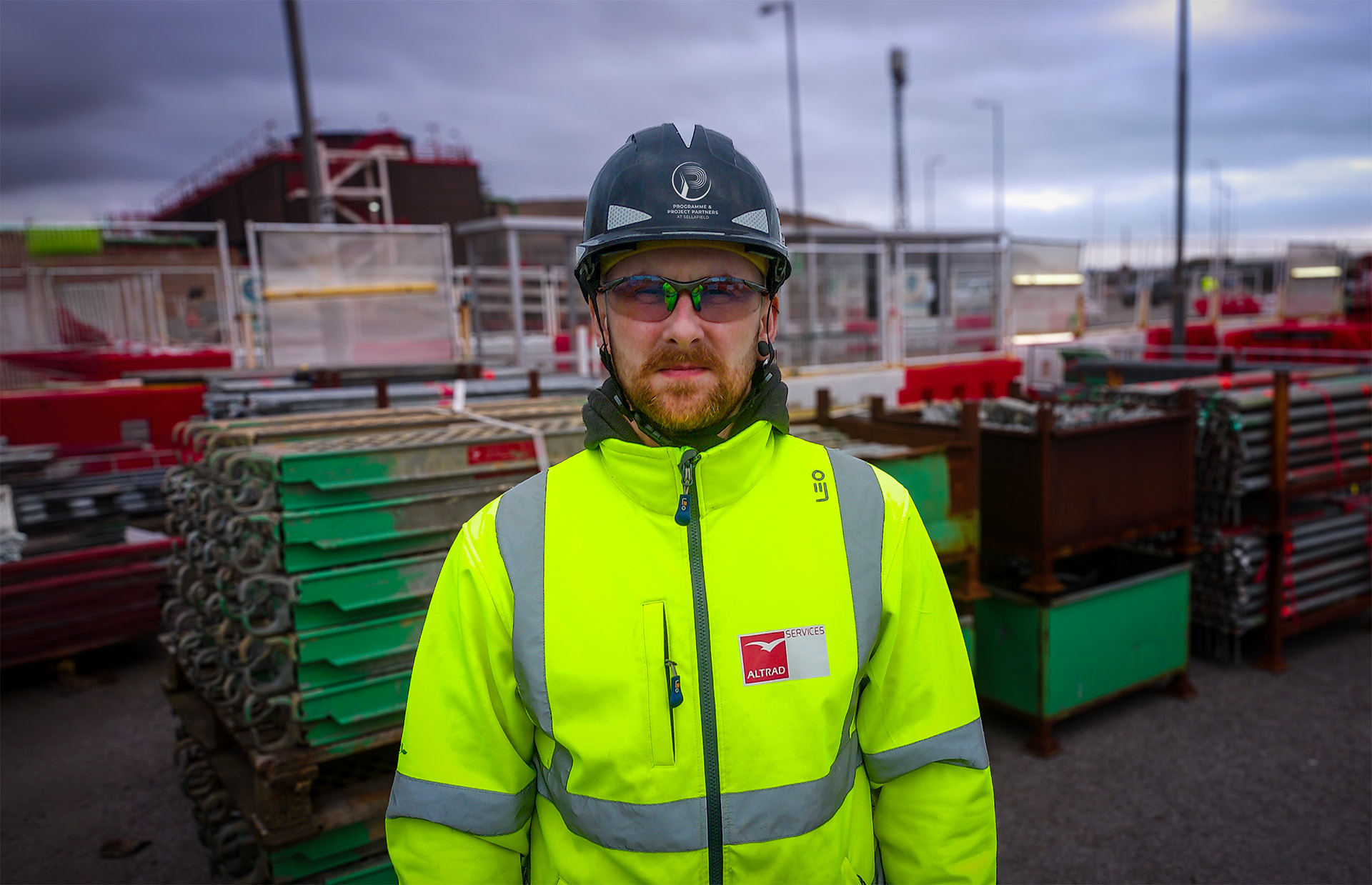
Craig BennettA scaffolding supervisor on our Sellafield Product and Residue Store Retreatment Plant (SRP) has talked about his pride in making a difference at PPP.

Craig Bennett, who works for Altrad on SRP, takes pride in the dedication of his team. Having recently stepped into his role, his leadership is already being recognised.

He said: “I’ve not long been a supervisor on this major project,  I’ve been put on SRP because of my work on other projects, so it’s good to see hard work gets noticed.”

Craig’s role involves overseeing scaffolding operations, ensuring work is done safely and efficiently. His strong relationships with both the team and management help him bridge the gap, something he believes is rare in a supervisory role.

One of the biggest challenges on site has been material logistics, with scaffolding materials needing to be lifted and moved across different levels.

Proud to Lead

For Craig, working on SRP is about more than just the job:  “The way they work makes me proud, it’s proper teamwork.

“I am proud to work at PPP because of the people, the progression and the recognition. I’ve been asked about moving up further, but I’m happy in this role.

“I’ve got a good relationship with the lads and management, so I can make a difference here.”

His advice to new SRP team members: “It’s a strong team, especially in scaffolding. The key is collaboration, everyone works well together and that makes the job easier and safer.”

Craig’s leadership and commitment reflect the spirit of being ‘proud to lead’, recognising hard work, valuing teamwork and ensuring safety remains at the heart of everything at PPP.

Read more of our Proud to Lead stories by clicking here.