Congratulations to Altrad, this month’s Safety Energy contractor of the month on our Sellafield Product and Residue Store Retreatment Plant (SRP) project. The award was presented by Jon Muir, SRP construction manager.
Altrad earned this recognition for their open and honest approach to safety. The team used a section of the recent PPI Stand Down to reflect on a managerial failure elsewhere on site that led to a near miss, sharing key lessons and outlining what is now being done differently to prevent it from happening again.
This level of transparency and learning demonstrates Altrad’s commitment to safety and their proactive attitude to maintaining high standards on site.
Jon Pyne, Altrad senior project manager, said:
“I’m proud of the team for stepping up and showing leadership during the PPI Stand Down. We didn’t shy away from a difficult conversation, we used it to reinforce our commitment to learning, raising standards, and most importantly, keeping people safe.
“Everyone on our team has a role to play in driving safety forward, and this award is a credit to their efforts.”
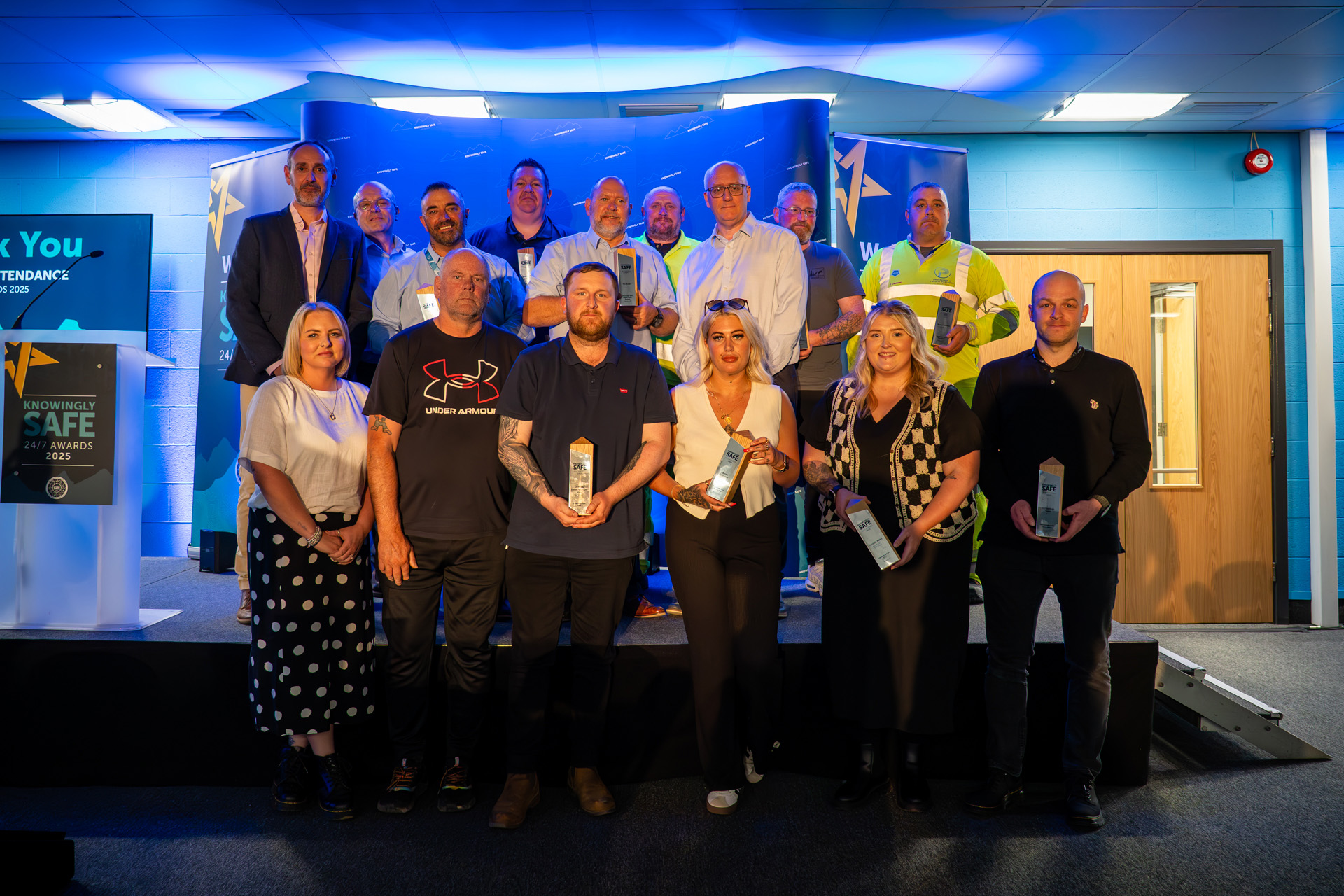
Safety is at the heart of everything we do across our Major Projects at Sellafield. It drives our decisions, actions and culture. The inaugural Knowingly Safe 24/7 Awards shone a light on those who truly embody championing safety across our projects and supply chain.
Programme and Project Partners (PPP) head of EHSSQ and assurance, James Lewis, said: “Every step we take towards our goal of Knowingly Safe is made possible by operatives and teams who are visible, but equally those who quietly lead by example.
“These awards are a way of shining a light on their individual and team contributions – which are the backbone of our safety culture.
“Safety is a team effort across major projects and no contribution should go unseen.
“We received so many nominations, showcasing the incredible efforts being made to keep everyone safe every day.
“The standard was exceptionally high, which made for some tough decisions, and this is a true reflection of the collaboration and commitment to safety across Major Projects.
“This year’s winners have demonstrated exceptional leadership, innovation and care – going above and beyond to ensure the wellbeing of those around them.
“A sincere thank you goes out to everyone who took the time to submit nominations and congratulations to all our shortlisted nominees and our winners – you all help us on our journey to Knowingly Safe.”
Boots On Switch On PPI Award
The Boots On, Switch On, People Plant Interface award recognised a team or organisation that really stepped up during our recent PPI campaign – showing leadership, innovation, and a strong commitment to improving safety around people and plant interactions.
We asked our projects and supply chains to lead and support us, and the response was fantastic.
Our winner was the Severfield PPI Improvements Team who embraced the PPI campaign from the start – reviewing work methods, identifying improvements, and even helping shape practical demonstrations for the wider site. Their enthusiasm and ideas helped bring the campaign to life.
The Severfield PPI Improvements team with their award, flanked by James Lewis, head of EHSSQ, left, and delivery director Steve Harnwell, right.
Our two shortlisted finalists also deserve recognition for their outstanding efforts:
The Sellafield Product and Residue Store Retreatment Plant (SRP) Permit Improvements Team – This team introduced the Site Assist digital permit system, transforming how PPI is managed on-site. It’s improved communication, streamlined processes, and strengthened compliance across multiple contractors. A great example of innovation driving safer, more efficient working.
The SIXEP Continuity Plant (SCP) Aligned Delivery Team & Careys PPI Team – The SCP team, in partnership with Careys, delivered a powerful and practical safety stand down. From live demonstrations to bold visual aids and empowering plant operators, they created an experience that left a lasting impression and sparked real conversations about safer ways of working.
Knowingly Safe Champion
Our Knowingly Safe Champion Award is all about recognising individuals who go the extra mile to make sure their work is carried out in a Knowingly Safe way.
We had a lot of fantastic nominations for this category, which made narrowing it down no easy task. We short-listed five stand-out individuals – and from that group, we’re proud to say we selected not just one – but two winners!
Our winners were Steve Mitchell from March and Ian Reid from Altrad.
Knowingly Safe Champion Award – From left to right, James Lewis, head of EHSSQ, Knowingly Safe Champion award winners Ian Reid and Steve Mitchell, with Laura Doughty, head of strategy and stakeholders.
Steve Mitchell has set the gold standard for proactive safety engagement. With over 80 safety observations submitted this year, Steve consistently identifies and addresses potential hazards before they escalate.
He ensures compliance with Sellafield Ltd and Project Delivery Directorate (PDD) safety standards and never hesitates to reach out to the safety team when clarity is needed. Steve’s dedication is a shining example of what it means to lead by example.
Ian Reid joined the SIXEP Continuity Plant (SCP) project just eight weeks ago, but his impact has been immediate and profound. Drawing on years of experience across the Sellafield site, Ian has brought leadership, pride, and high standards to his team.
He’s known for his strong presence during POWRA and housekeeping discussions, and his exceptional three-way communication skills have earned praise from supervisors and scaffold engineers alike.
Special recognition also goes to our three shortlisted nominees who made this a tough category to call:
Pete Turner from Careys – Pete is a model of conscientious work and communication. He regularly exercises his stop work authority to ensure clarity and safety, and he’s always aware of how his tasks affect others. Pete’s attention to housekeeping and his commitment to leaving work areas clean and safe set him apart. His enthusiasm and strong communication make him a valued member of the team.
Steve Murdock from Cumbria Nuclear Solutions Ltd – As the project waste coordinator for the Civil Nuclear Constabulary Operations Unit (CNC OU) project, Steve plays a critical role in environmental protection and compliance. His meticulous management of waste segregation, skip logistics, and COSHH inventories has earned praise from Sellafield Ltd Intelligent
Client teams. Steve’s dedication extends beyond his role – he personally took on
improvements to quarantine arrangements following an incident, demonstrating his commitment to continuous improvement and safety excellence.
Darren Miles from Balfour Beatty Kilpatrick – Darren’s journey from operative to compound supervisor is a testament to his professionalism and drive. He has transformed the project’s waste management practices, eliminating non-compliances and introducing innovative solutions like a paint tin crusher and PPE
recycling. Darren’s initiative to donate reusable timber to local schools has created a lasting social impact. His work not only improves safety and sustainability but also strengthens community ties.
Knowingly Safe Supervisor Award
For the Knowingly Safe Supervisor Award, we looked for a supervisor who puts safety at the heart of everything they do. Whether it’s setting the tone for the day, leading by example, or supporting their team, these individuals make safety a priority every step of the way.
From left to right, James Lewis, head of EHSSQ, Robert Mellon of Design Grid and Brian Reid, of NG Bailey.
Our winner was Robert Mellon from Design Grid. Since stepping into a supervisor role over eight months ago, Robert has earned the full respect of his team and peers. He puts health and safety first in everything he does and was recently recognised with the Lindner Interiors’ Supervisor of the Year award for his commitment and leadership.
We had two more deserving finalists who deserve plaudits for their nominations:
Nigel Blacklock from Sir Robert McAlpine – Nigel is a long-standing and highly respected supervisor at SRM. Known for his calm leadership and deep site knowledge, he mentors others, leads by example, and brings a steady hand to every challenge. His return to work after a heart attack has only deepened the admiration and respect he commands across the site.
Ryan Martin from Severfield – Ryan is known for his openness, honesty, and high standards. He’s a strong advocate for the Knowingly Safe culture and has played a key role in improving Mobile Elevated Work Platform (MEWP) safety standards, even contributing to training content and video resources used across PDD.
Knowingly Safe Team Award
The Knowingly Safe Team Award recognises a group of individuals who consistently demonstrate safe behaviours and a strong safety culture in how they work together and deliver their tasks. Our winner’s dedication to building a strong, people-first safety culture is truly inspiring, and set them apart from the other very deserving finalists.
The Sir Robert McAlpine Site Establishment Team from BEPPS2 with James Lewis, head of EHSSQ, far left and Danielle Slattery, PPP head of lot 1, front right.
Our winner was the Sir Robert McAlpine Site Establishment Team from our Box Encapsulation Plant Product Store Two (BEPPS2). This team has set the tone for safety from day one. They lead by example – using Stop Work Authority confidently, maintaining tidy work areas, and creating a supportive, people-focused safety culture. Their approach is proactive, inclusive, and built on mutual respect.
Our congratulations also go to our shortlisted finalists:
SIXEP Continuity Plant (SCP) Construction Team including Altrad, Mammoet and their supply chain – The SCP team showed what great planning and teamwork look like during the delivery of the Bulk Storage Tank. From daily readiness reviews to post-job learning, they demonstrated strong communication, collaboration, and a clear commitment to doing the job safely – even when it meant pausing to rest and reset.
Dale Barcock, Barry Boyd & Martin Kellett – This trio has played a key role in raising safety standards around trench support and temporary works. Their leadership has not only improved safety but also boosted efficiency across the project – proving that safety and productivity go hand in hand.
Knowingly Safe Rising Star Award
The Knowingly Safe Rising Star Award recognises someone early in their career who’s made an immediate and meaningful impact. These are the individuals who bring energy, fresh ideas, and a real passion for safety – people who don’t just follow the rules, but actively shape the culture around them.
From left to right, James Lewis, head of EHSSQ, Lauren Johnston, of Amentum, and Thomas Hyland, of Balfour Beatty Kilpatrick.
Congratulations to our winner, Lauren Johnston, from Amentum, who works on our Civil Nuclear Constabulary Operations Unit (CNC OU) project. Lauren joined the CNC project just over a year ago and has quickly become a key figure in driving health and safety across the consortium. From rolling out new site-wide procedures to leading fire safety planning and training, Lauren has shown leadership well beyond her years.
Her work has helped raise compliance standards across the board – and her commitment has been recognised with a RoSPA Gold Award for the project. She’s seen as a go-to person by everyone on site.
There are a lot of talented rising stars across major projects and recognition is definitely deserved by our two shortlisted finalists:
George Tyson from Sir Robert McAlpine – Box Encapsulation Plant Product Store Two (BEPPS2) – George is a working supervisor and safety rep at SRM who leads from the front. He’s approachable, proactive, and always ready to raise concerns or share ideas to improve safety. Whether it’s through toolbox talks or informal chats, George promotes a culture of openness and responsibility. His influence on the ground is clear – and his passion for safety is contagious.
Stacie Davies from Altrad – Since joining the SIXEP Continuity Plant (SCP), Stacie has taken the lead on mental health in a way we’ve never seen before on PPP. She organised an off-site event with three specialist speakers, tailored to different learning styles and focused especially on site operatives – who often miss out on this kind of engagement. It’s a fresh, inclusive approach that’s already making a difference, and it’s just one of several initiatives Stacie is driving forward.
Knowingly Safe Innovation Award
Innovation and learning is a key part of building a safer future – and that’s exactly what our Knowingly Safe Innovation Award is about. It recognises an individual, team, or organisation that has gone above and beyond to bring new thinking, smarter solutions, and meaningful improvements to safety – whether that’s through technology, process changes, or lessons learned that benefit the wider industry.
We received some truly impressive nominations for this category, and it’s clear that innovation is happening all the time across our projects.
The i3 Coatings Team from SRP receive their award from James Lewis, head of EHSSQ, far left and Kim Chester, PPP head of lot 2, far right.
Our winners of the Innovation Award were the i3 Coatings Team on our Sellafield Product and Residue Store Retreatment Plant (SRP). The i3 team has taken a proactive, data-driven approach to health and safety on the SRP project. They’ve introduced real-time monitoring for vibration and dust exposure, using wearable tech and integrated analytics platforms – giving supervisors live alerts and enabling immediate action. They’ve also trialled slip-resistance testing and upgraded respiratory protection, all with the goal of protecting workers and improving long-term health outcomes. It’s a brilliant example of how technology and evidence-based thinking can drive real change.
Innovation doesn’t just mean new gadgets – it means thinking differently, challenging the norm both on Sellafield and within the industry, and finding better ways to keep people safe, so congratulations to all our shortlisted finalists:
The Sunbelt Powered Access Team – Sunbelt has made a major impact on safety at height – investing in new technologies like the EQSS Over Watch system for scissor lifts and supporting its roll-out across over 100 MEWPs on Sellafield projects. They’ve also led the way in digital planning tools, using building information modelling (BIM) and augmented reality to help teams choose the right equipment and reduce risk before work even begins. Their commitment to innovation and collaboration is helping raise the bar across the industry.
The Architectural Fit Out Team on Sellafield Product and Residue Store Retreatment Plant (SRP) – Faced with the challenges of traditional decontamination paint methods, this team took a step back and re-imagined the process. They explored alternative materials, collaborated with suppliers, and developed a brand-new panel system specifically designed for Sellafield. The result? A safer, faster, and more efficient solution that reduces dust, noise, and hand, arm, vibration syndrome risks – and has the potential to be adopted across the wider nuclear sector. It’s a fantastic example of innovation driven by both safety and practicality.
Courage to Care 24/7 Award
This award is something truly special – the Courage to Care 24/7 Award. This award recognises someone who lives our Knowingly Safe values not just at work, but out in the wider community.
It’s for those who go above and beyond to make a difference in people’s lives – showing care, compassion, and leadership when no one’s watching and there’s no spotlight.
From left to right, James Lewis, head of EHSSQ, Danielle Bailey and Craig Peggie, of Sir Robert McAlpine.
The award went to Danielle Bailey from Morgan Sindall Infrastructure, who works on our Sellafield Product and Residue Store Retreatment Plant (SRP) – Danielle has made a huge difference through her work on mental health – both inside and outside of work. As co-chair of the SRP Mental Health First Aiders Forum, she’s led initiatives like Wellbeing Wednesdays, which include on-site support and off-site group walks to encourage open conversations. Her leadership has helped create a culture of care and connection across the team.
The actions of all our nominees remind us that safety and wellbeing don’t stop at the site gate – they’re part of who we are, every day. Special recognition goes to the shortlisted finalists:
Tom Maguire from KBR – Tom has dedicated over 500 hours of voluntary service as a Special Constable with Cumbria Police – on top of his full-time role in PPP/KBR. He works weekends, takes on the same risks as regular officers, and is even training for blue light response. Tom’s commit-ment to public safety is a powerful example of courage and care in action.
Sebastian Zurek from Careys – Sebastian is a true community champion. From charity walks and local projects to helping elderly neighbours and restoring a memorial bench – he’s always looking for ways to give back. He brings the same care and professionalism to his day job, making his impact even more inspiring.
Knowingly Safe Leader Award
The Knowingly Safe Leader Award recognises one of our many outstanding leaders who consistently champions the Knowingly Safe culture. This award is about more than just job titles. It’s about the individuals who lead by example, who empower others to speak up, and who create an environment where safety isn’t just a priority – it’s a shared value, embedded in everything we do.
Our Knowingly Safe Leader Award winner John Leslie, centre, with James Lewis, head of EHSSQ, and Susan Mackenzie, corporate head of safety, safeguards and quality.
Across the programme, we’re fortunate to have many brilliant leaders who fit that description but our winner truly embodies what it means to be a leader on a major project.
Congratulations goes to John Leslie, from Morgan Sindall Infrastructure and project director of our Sellafield Product and Residue Store Retreatment Plant (SRP). John’s leadership is consistent, visible, and grounded in genuine engagement with his team.
He always makes time – whether it’s to support a colleague, reinforce safety expectations, or simply listen. He has played a pivotal role in shaping the safety culture at SRP.
Under his leadership, the team has created an environment where people feel confident to report concerns, near misses, and incidents without hesitation.
In fact, earlier this year, there was a noticeable shift in reporting behaviours – driven by his encouragement and example – which has had a lasting positive impact on the project’s safety performance.
Knowingly Safe Supply Chain Award
The Knowingly Safe Supply Chain Award recognises our many brilliant supply chain partners, who all contribute to making our projects and our site Knowingly Safe.
The award went to a partner who really excels in their commitment to being Knowingly Safe and consistently contributes to the wider programme through sharing learning, bringing new innovations and just demonstrating excellence in everything they do.
Knowingly Safe Supply Chain award – Representatives from NG Bailey celebrate their award win with James Lewis, head of EHSSQ, far left and John Rossiter, PPP’s head of supply chain and commercial, far right.
After much deliberation, the winner was NG Bailey, who continues to raise the bar when it comes to safety performance and innovation.
They’ve brought fresh ideas and technologies into the Safety Hub, consistently delivering high standards in Safety Energy and compliance. Their leadership team is highly visible and engaged, and their focus on SQEP has helped drive a culture of competence and accountability.
Operatives and supervisors from NG Bailey are regularly recognised for their positive contributions to project safety and for supporting wider programme initiatives. They are a strong, consistent presence in the Safety Hub and a valued partner.
This award proved tough to narrow down to just three nominees, given the excellent partners we have within our supply chain, but praise also goes to our shortlisted finalists:
Keltbray – Keltbray has shown a clear commitment to improving safety culture and workforce engagement across the programme. What really sets them apart is their proactive involvement in the Safety Hub – despite not being required to participate, they’ve actively sought out opportunities to contribute and be part of the solution.
They’ve also been pioneers in People Plant Interface (PPI) safety, leading the way with proximity warning systems and playing a key role in shaping the early development of the PPI standard. Their forward-thinking approach and willingness to collaborate have made a real impact and paved the way for the standard to take shape.
Balfour Beatty Kilpatrick – Firstly, BBK have been a truly proactive and committed member of the Safety Hub since its formation, supporting a range of initiatives and always bringing a collaborative mindset. One stand-out contribution has been their work on fatigue management, including a trial with a leading third-party provider to explore new ways of managing this critical risk which has typically been difficult to control across the industry. In addition, their leadership has shown strong commitment to safety, and their workforce continues to deliver high standards across the programme. BBK’s willingness to engage, share learning, and support innovation makes them a key player in our collective journey towards Knowingly Safe.
Delivery Director, Steve Harnwell, who attended the event, said: “What’s important is that we do recognise good safety behaviours and where people, most of the time, will do everything right and keep people safe.
“Sometimes we get too focused on the negative side of safety where somebody is hurt, or something hasn’t gone to plan.
“It’s really important to look and learn, but what we shouldn’t lose sight of is when people are doing it well, and we should thank people for it because that’s how we get a better culture, a better attitude and ultimately a better form of safety.”
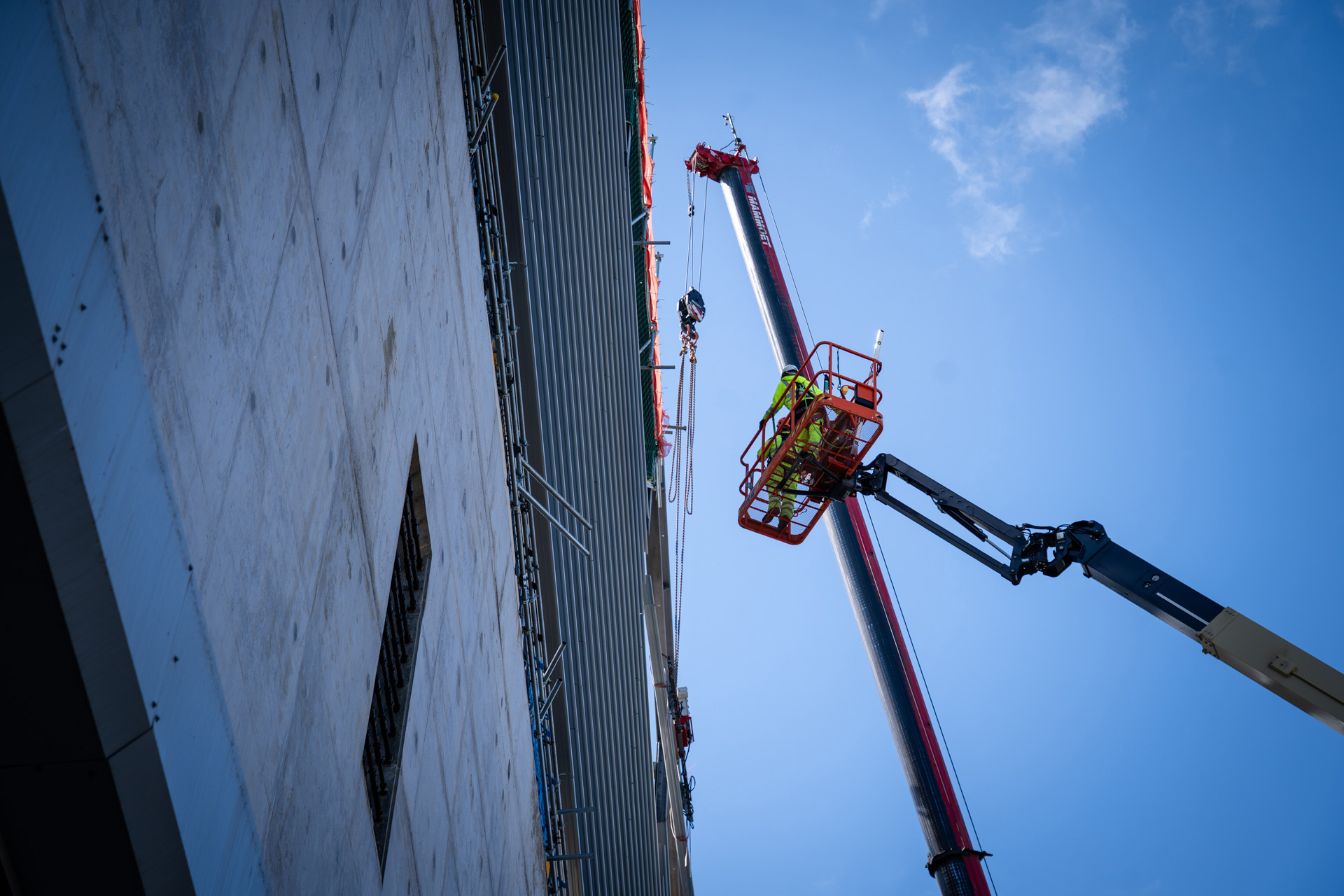
As part of on-going efforts to reduce the risks associated with working at height, a newly revised Mobile Elevated Work Platform ( MEWP ) standard has been issued across major projects at Sellafield, incorporating valuable insights and lessons learned over the past 12 months.
Originally introduced in February last year, the MEWP standard was developed by the Health, Safety and Wellbeing Hub to enhance safety measures for working at height across all our projects.
This has led to the appointment of over 40 MEWP co-ordinators and the replacement of a host of MEWPs with models that now have enhanced safety features. New MEWP management plans were also introduced across the supply chain.
This updated version builds on that foundation, ensuring our practices remain aligned with the highest safety standards and reflect our ongoing commitment to continuous improvement.
Within the construction industry, incidents involving MEWPs occur at three times the rate seen in other sectors. We’re determined to stay ahead of that curve and ensure that everyone working with MEWPs is Knowingly Safe.
The use of MEWPs has increased significantly across major projects, driven by the progression of several in-flight projects through various construction phases. Over the past 12 months, the Hub has reviewed our progress and incorporated lessons learned into revision two of the standard.
Key updates
Some of the key highlights are that it is now mandatory that all scissor platforms must have electronic secondary guarding as a feature. And the MEWP hazard screening sheet has been updated following 12 months of learning.
Additional clarity has also been added with new sections on disciplined MEWP operations and emergency arrangements following Hub feedback.
There is an updated criteria for defining complex tasks and definitions introduced for two-handed controls and intelligent anchor points – the latter in response to learning from one of our projects.
This revision marks a significant step forward in our journey to make working at height safer and more efficient. By embedding these changes, we continue to lead the way in construction safety and ensure that every team member working with MEWPs is equipped with the knowledge and tools to operate safely.
MEWP co-ordinators from each organisation are set to attend an upcoming Major Projects MEWP co-ordinator session. This session will cover the revised standard in detail, provide an opportunity to raise any issues or feedback, and include a meeting with Steve Harnwell, major projects delivery director, the executive sponsor for the MEWP standard.
Pride in MEWP Standard
Mark Atkinson, health and safety manager on our Sellafield Product and Residue Store Retreatment Plant (SRP), said: “We are very proud of our MEWP standard. Its focus is beyond compliance and we believe powered access safety should be a culture, not a checklist.
“Powered access equipment is widely regarded as one of the safest methods for enabling work at height but, like any equipment, there is always scope for further improvements in its safe use.
“With work at height continuing to pose one of the most significant risks across major projects and broader industries, I believe this standard will keep us ahead of the curve.
“If you are not aware of it, and are influencing MEWP work within your organisation, please review the update and its safety critical information.”
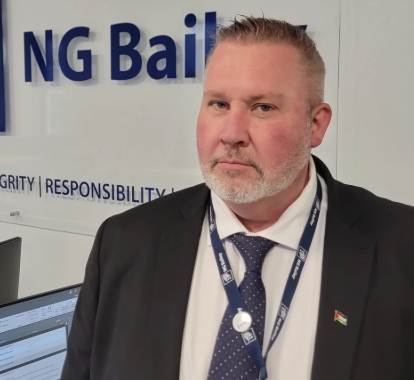
Congratulations to NG Bailey, this month’s Sellafield Product and Residue Store Retreatment Plant (SRP) Safety Energy contractor of the month. The award was presented to the team by Fraser Cruickshank, SRP senior project manager.
NG Bailey earned this recognition for their excellent concurrent Safety Energy performance, maintaining a low impact safety energy score, and effectively managing period one observation fluctuations. This achievement reflects their commitment to safety and their proactive approach to maintaining high standards on site.
Kent Fearon, NG Bailey SHE manager, said: “Being named SRP’s Safety Energy contractor of the month for the third time is a tremendous honour for NG Bailey — a milestone that reflects the strength of our team and our commitment to continuous improvement.
“This recognition highlights not only our collective efforts but also the safety innovations we have championed, including the 360° protection safety helmets and the Press to Check RPE system, now standard across PDD.
“Our collaborative approach, working closely with the project team and sharing best practices, has been key to driving progress and raising the bar for safety performance. Since the launch of the Safety Energy initiative, we have set ambitious targets that challenge us to continually improve and lead by example across our projects.
“I could not be prouder of the dedication and passion shown by our entire team. This award is a testament to their hard work. While I may set the vision, it is our workforce and management who bring it to life through their relentless focus and commitment. This recognition belongs to every single one of them.”
A huge well done to the NG Bailey team for their outstanding work and continued dedication to safety.
There’s now just one week left to nominate our Knowingly Safe champions for 2025. What’s more, there are eight awards to choose from.
Do you know someone who has gone above and beyond to keep us all Knowingly Safe? Well this is your chance to get them the recognition they deserve!
The window to nominate people for this year’s inaugural Project Delivery Directorate (PDD) Knowingly Safe Awards 2025 closes on Wednesday 21 May.
The awards will celebrate those working across Major Projects who go above and beyond to drive continuous improvement in our safety performance and those who have shown the Courage to Care 24/7 within the wider community.
The eight award categories:
Knowingly Safe Champion – An individual who consistently goes above and beyond in ensuring they deliver their work in a Knowingly Safe manner.
Knowingly Safe Supervisor – A supervisor who puts safety performance at the forefront of their duties when supervising their team.
Knowingly Safe Team – A group of individuals who have consistently demonstrated Knowingly Safe behaviours during the delivery of their work.
Knowingly Safe Rising Star – An individual early in their career who has joined the programme and made an immediate and significant impact. They will have brought drive and energy to their role and demonstrated key PPP behaviours.
Knowingly Safe Innovation Award – The organisation, team or individual who has proactively brought safety improvements and innovation through learning within their organisation or the wider industry.
Boots On, Switch On – People Plant Interface Award – The organisation or team who have proactively sought out improvements and innovation in the area of PPI during the recent campaign.
Courage to Care 24/7 Award – This award is to recognise the team or individual who demonstrates our Knowingly Safe behaviours and values outside of the workplace within their wider community.
PDD Supply Chain Knowingly Safe Award – This award is to recognise the supply chain partner who have excelled in their demonstrable commitment to Knowingly Safe through everything they do (organisations are not required to submit a nomination for this award).
How to nominate
Nominations can be made by clicking the link here before the deadline of 21 May or by scanning the QR code, pictured left.
An independent panel will select the winners and runners-up with the results to be announced at the PDD Knowingly Safe Awards ceremony on Wednesday 11 June in B524.
PPP head of EHSSQ and assurance, James Lewis, said:
“Every step we take towards our goal of Knowingly Safe is made possible by operatives and teams who are visible, but equally those who quietly lead by example.
“These awards are a way of shining a light on their individual and team contributions – which are the backbone of our safety culture.
“Safety is a team effort across major projects and no contribution should go unseen. I look forward to reading the nominations and meeting the winners at the awards event.”
Cheryl Fawcett on top of Scafell Pike after being involved in a mountain rescue
Knowledge of first aid and remaining calm in a stressful situation are two attributes that one of our colleagues displayed in abundance recently.
Cheryl Fawcett, who works in the PPP Improvements team, had joined a women’s walking group and on their first hike up Scafell Pike, she had to handle an alarming situation.
When they were about a quarter of the way up England’s highest peak, Cheryl was called to assess a fellow walker who was showing signs of distress.
The girl was shaking and struggling with her breathing. At first the girl’s friends said they believed she was having a panic attack but when Cheryl tried to calm the girl and ground her, it soon became clear that there was something more serious wrong.
Cheryl asked her friends if she had any medical conditions but they didn’t know and eventually the girl managed to tell them she had something called Vasovagal syncope (VVS), a sudden drop in heart rate or blood pressure that causes fainting.
So Cheryl adapted quickly and laid her down and raised her legs above her head to try and alleviate the condition.
She instructed another member of the group to contact 999 and ask for the mountain rescue while she continued to monitor the situation.
She asked if anyone had any glucose sachets and luckily another walker who was going past, was able to supply one so that Cheryl could then rub it into her gums, which helped bring her round.
Reassuring
Cheryl said: “I just knew I had to get information, keep her comfortable and stable, keeping her legs in the air. After five or 10 minutes a doctor came past, taking part in a race and I passed over the details to him and he took over,
“He just continued with what I had been doing which reassured me I had done all the right things.
“All the information from the EHSSQ team that goes onto SharePoint, along with life lessons I have learned along the way, all helped me.”
Cheryl stayed with the doctor until the patient was taken down on a stretcher and she knew she was okay, before carrying on to reach the summit of Scafell Pike.
She has also helped the walking group develop their health and safety awareness with tips she has picked up from her time on PPP.
She added: “I am trying to help them being proactive and not reactive, so checking we know of any medical conditions before we set off on the walk and making sure everyone knows which numbers to call if there are any issues.
“It is about being prepared, checking how many hours of light there will be and the weather conditions, to make sure you have the right kit and the right information.
“This awareness all comes from my time on PPP and how we need to be prepared and understand the conditions we are working in at all times.”
Our journey to Knowingly Safe is crucial, so that everyone is switched on to safety 24/7, at work and at home – and this is a great example of doing just that.
Read more of our Knowingly Safe 24/7 stories by clicking on the links below:
Our journey to Knowingly Safe is crucial so that everyone is switched on to safety 24/7 at work and at home.
During a severe winter storm that caused a two day power outage, Ewan Kerr, technical manager at NG Bailey, and his wife, relied on their open fire for continuous heat.
In the early evening on the second day, their carbon monoxide alarm sounded, waking them on the couch from what Ewan described as ‘probably our last sleep’.
Both were disoriented, with headaches and dizziness, but the alarm’s piercing sound alerted them just in time.
Ewan said:
“Always position your carbon monoxide monitor close to the source of combustion. This ensures any build up is detected early.
“Each floor of a home should have a linked smoke detector, ideally placed near sleeping areas, so the alarm can be heard.
“Rooms with combustion sources must be well ventilated. We had recently sealed drafts in our cottage, which improved energy efficiency but unintentionally reduced ventilation and contributed to the dangerous build-up of carbon monoxide.”
Regulations require interlinked smoke and fire alarms in homes. These alarms are designed so that if one goes off, they all do, ensuring people hear the alarm wherever they are in the house. Ewan reflected on this, adding: “I wonder how many lives this has saved?”
His experience is a stark reminder of the unseen dangers that can arise when proper precautions are not in place.
He urges everyone to have the courage to care by installing carbon monoxide alarms, placing them correctly, and ensuring proper ventilation in areas with combustion sources.
By taking these simple but essential precautions, we can protect ourselves and those around us from the silent and deadly threat of carbon monoxide poisoning.
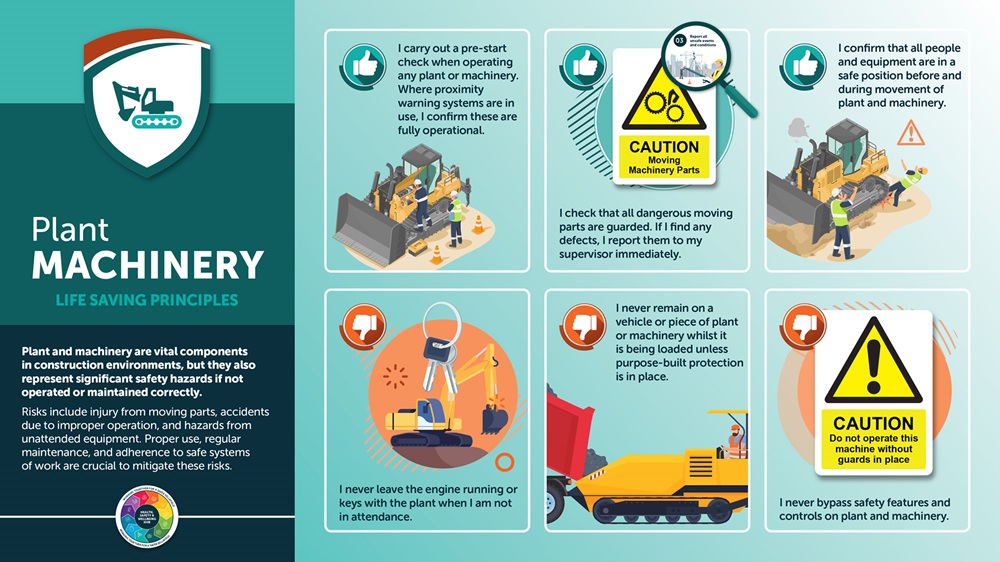
Working with plant and machinery can present various hazards and risks that can lead to serious injuries or fatalities if not managed properly.
This is why the Health, Safety and Wellbeing Hub has introduced the Plant & Machinery Life Saving Principles to keep everyone work Knowingly Safe.
We will be highlighting why it is so crucial to follow these non-negotiable principles to ensure we go home safely each night.
The complexity when working with Plant & Machinery requires that robust safety measures are in place, and that anyone operating the plant & machinery is competent and vigilant throughout the operation.
The principle, part of the 10 Life Saving Principles, launched by the Hub, to supplement our Golden Rules, highlights some of the key areas where we need to be vigilant.
Follow the rules
The rules state:
I will carry out a pre-start check before operating any plant or machinery.
I will confirm any proximity warning system are fully operational before work begins.
I must check that any dangerous moving parts are guarded and report any defects immediately.
I must confirm that all people and equipment are in a safe position before, during any movement of plant & machinery.
I must never bypass safety features and controls on plant or machinery.
Never remain on a vehicle, plant or machinery, when it is being loaded or unloaded unless control measures are in place.
Neil Walker, Health & Safety Advisor for PPP, said:
“The Life Saving Principles identify our high-risk activities, one of which is working with Plant & Machinery.
“We know across the construction industry, this is one of the areas where there can be major incidents or fatalities, so it’s critical to us that our Life Saving Principle introduces control measures to help in working safely when operating both plant and machinery.
“One of the non-negotiables is that plant and machinery must be fitted with a proximity and/or guarding safety devices to ensure the safety of our operators.”
An SHE advisor on the Sellafield Product and Residue Store Retreatment Plant (SRP) was one of the first on the scene following a recent gas explosion which rocked a home in Whitehaven.
John Dunleavey, an SHE Advisor for Severfield, part of our supply chain, credits his military background and PPP safety training for helping him stay calm as he assisted those affected.
John Dunleavey
He was at home on New Year’s Eve, when a gas explosion at a nearby property on Hugh Street in Bransty, seriously injured three people and left the property gutted.
The blast shattered windows, triggered car alarms, and left the street in chaos. Families in nearby homes were evacuated as emergency services worked to secure the area and assist those affected.
On the scene of gas explosion
John said: “I don’t live far from the incident, and when the bang went off, I knew it was something serious, I saw a plume of dust and ran down to the scene.”
When he arrived, John found the street in disarray, with people running around in shock.
“The first thing I asked was, ‘Is anyone still inside?’ Nobody knew for sure, so without hesitation, I went in.
“I couldn’t see much at first, but then I spotted an arm moving under the rubble.
“We started clearing debris and managed to get the man out. He was conscious but clearly in shock.
After moving the man to safety, John learned that two women were still trapped upstairs. However, the staircase had been destroyed.
“I shouted to them, asking if they were okay. One of them responded, but there was nothing more I could do until emergency services arrived. I reassured them help was on the way.”
Relying on experience
John said his Army background and safety training were key in the situation – but it did bring back some difficult memories from his time in Afghanistan.
“It’s instinct. After nearly 28 years in the Army, you’re drilled to act when someone needs help. Nobody gets left behind. I didn’t think twice about going in.
“I’ve suffered from PTSD. Being in that house triggered some of those feelings, but I focused on the people who needed help.”
The incident reinforced John’s belief in PPP’s Knowingly Safe 24/7 ethos.
“A lot of people stood outside, unsure what to do. It’s about having the confidence to act when it matters most.
“PPP’s Knowingly Safe 24/7 culture is all about that, knowing your surroundings, having the courage to care and looking out for others.”
John’s actions made a life saving difference, showing the true meaning of Knowingly Safe 24/7, protecting others both insides, and outside, of work.
A routine Friday night rugby match turned into a life or death situation when Nigel Blacklock, a Senior Site Supervisor on our Box Encapsulation Plant Product Store 2 (BEPPS2) project, collapsed during training at St Benedict’s Rugby Club in Whitehaven.
Unknown to him or his teammates, Nigel was having a heart attack, a medical emergency that only 8% of people survive after defibrillation – a statistic he was told by the doctors who treated him.
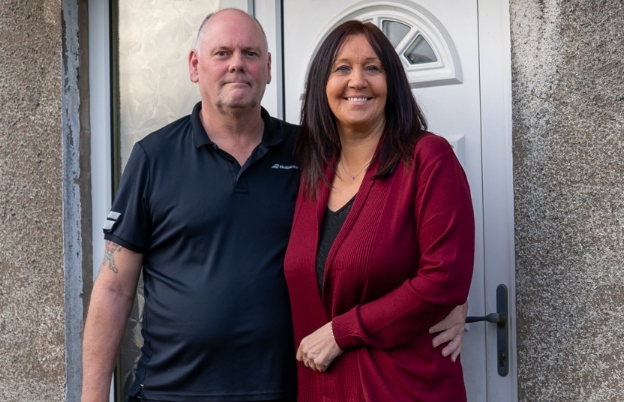
Nigel Blacklock, pictured with his wife Lyndsey
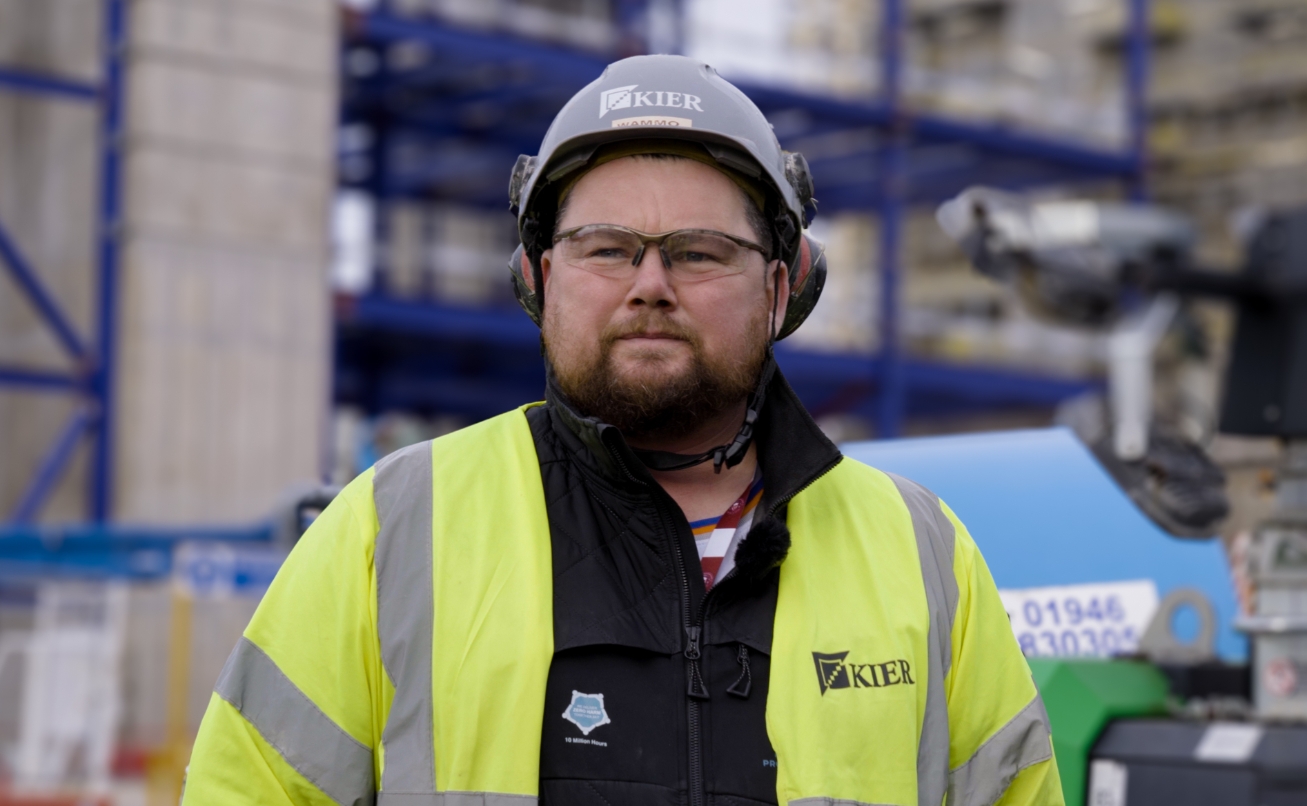
The first to respond was Carl ‘Wammo’ Walmsley, a Concrete Chargehand from our Sellafield Product and Residue Store Retreatment Plant (SRP) project team, who was refereeing the match when Nigel went down.
Quick to action
Carl immediately assessed the situation, realised the severity, called for the defibrillator and began performing cardiopulmonary resuscitation (CPR).
Carl said: “I had my back to it all at first, then I heard someone shout Nigel has gone down, I thought it must have been a typical sports injury. But when I turned him over I knew it was something far more serious.
“All I kept remembering from my first aid training was the first four minutes are critical. Everything I learned came back to me in the moment, and without that training, I don’t think I could have helped him.”
When the defibrillator arrived, Carl followed the instructions to administer a shock, attempting to restart Nigel’s heart before continuing CPR until the paramedics arrived and took over.
Carl Walmsley
For Lyndsey, Nigel’s wife, the situation was terrifying. Recalling the moment she found out, she said: “I was at home when one of the lads’ wives messaged me to call her urgently. She said Nigel had collapsed, and he hadn’t moved for 15 minutes. I panicked, trying to get to the hospital, not even knowing if he would survive. It was the longest night of my life.
“We’re taking it one day at a time, he’s not 100% yet, but he’s making progress. The support from his colleagues at PPP and the rugby lads has been incredible—they’ve checked in constantly, and it’s meant so much to our family.”
Now home and recovering
Nigel spent nearly a month in the hospital, and his recovery has been slow but steady. The incident left an emotional mark on everyone involved.
Carl admitted to struggling with flashbacks in the weeks after, saying: “When Nigel posted on social media that he was okay, I finally felt like I could breathe again.”
Nigel acknowledged the profound impact on his family, stating: “It’s brought us closer together. This could have been a completely different story.”
The aftermath of the incident has also led to actionable changes. Operatives on BEPPS2 requested more defibrillators through the observation system, resulting in the installation of two additional units on-site.
Lyndsey expressed heartfelt gratitude to Carl and the team who saved him: “They were absolutely brilliant. I can’t thank them enough for what they did for Nigel and for us as a family.”
This story is a powerful reminder of the importance of first aid training, community support, and defibrillators. For Nigel and his family, it was the difference between tragedy and a second chance at life, and a true example of the PPP workforce looking out for one another.





 There’s now just one week left to nominate our Knowingly Safe champions for 2025. What’s more, there are eight awards to choose from.
 Nominations can be made by

 Both were disoriented, with headaches and dizziness, but the alarm’s piercing sound alerted them just in time.