ILW-East Zone: Paving the way for future infrastructure projects at Sellafield

The first phase of a complex land preparation project, known as the Intermediate Level Waste East Zone (ILW-EZ), has been completed on the Sellafield site paving the way for future infrastructure projects that will support the site’s decommissioning.

The ILW-EZ project has been completed nine months ahead of schedule, achieving significant savings, and with exceptional safety performance – a testament to the highly collaborative approach taken by our partnership.

Derek Roberts, senior client lead, said:

“It has been a strong collaborative effort to get us to this point. The team has delivered the project with a good safety record and schedule performance whilst remaining under budget. Everyone should be proud of what has been achieved.”

After two years of complex planning, the project has seen ground and excavation works completed to prepare land equivalent in size to seven football pitches – 50,000m2. The team, including supply partners Keltbray, Flannery, G&AM Lawson, DSD Construction, and NG Bailey, has excavated 130,000m3 of material over 18 months to enable the construction of facilities which include our Lightly Shielded Store (LSS1). This facility will store thousands of intermediate level waste packages pending the future availability of a Geological Disposal Facility (GDF).

Key to the savings achieved, the excavated material hasn’t gone into landfill and will eventually be reused when the site is remediated and returned to its end state.

Paul Bettany, head of project, said:

“I’m delighted we’ve reached this major milestone which is a critical enabler and sets the stage for future facilities to be built that will play a key role in the site’s clean up.

“Delivering projects of this scale in the complex environment of a nuclear site is not easy. Together, we have completed the works safely, exceeded our ambitions, and managed to close out the project ahead of schedule and under budget.

“This is an amazing effort from so many teams and our supply chain partners.”

Click here to watch the video to learn more and to hear from those involved:

Manufacturing Excellence: A look at SRP’s specialist glovebox lines

As construction of our Sellafield Product and Residue Store Retreatment Plant (SRP) progresses at pace, work to manufacture and test its specialist glovebox lines is well underway. Once SRP is commissioned, these gloveboxes will act as the beating heart of the plant, retreating and repackaging over 30,000 special nuclear materials (SNM) packages for long-term safe storage.

There are four glovebox lines being manufactured, consisting of more than 50 gloveboxes:

  • Group 400 Magnox Repackaging Line.
  • Group 410 THORP Repackaging Line.
  • Group 500 Residues Retreatment Line.
  • Group 300 Powder Retreatment Line.

The two repackaging lines are being manufactured and tested by NIS, and the retreatment lines are being manufactured and tested by Ansaldo.

Click here to watch part 1 of the video below to learn more about the importance of the equipment:

The Group 400 line recently completed Factory Acceptance Testing (FAT) and is now in a period of Integrated Works Testing (IWT). This IWT phase will see the gloveboxes fully assembled, powered up and undertake close to 400 operational tests to demonstrate the functionality of the equipment. It is an opportunity to fix anything that isn’t quite right and allows the team to test the process with dummy cans, rectifying any issues and providing confidence that the equipment can be delivered and installed safely on-site next year.

Click here to watch part 2 of the video below which features our commissioning engineers, based at NIS in Chorley, are testing the glovebox lines:

Sellafield has safely and securely managed plutonium since the 1940s, developing world leading expertise in the process and being recognised as the UK’s centre of excellence for plutonium management. The UK’s inventory of civil plutonium arose from the reprocessing of spent fuel undertaken over many decades. This was the process of taking used nuclear fuel and separating it into its component parts, one of which is plutonium which will remain radioactive and toxic for a considerable period of time.

It’s a mission of national significance and requires expertise across a vast supply chain. PPP currently works with 185 live suppliers who are delivering critical contracts across PPP. 49% of this live supply chain are SMEs, like NIS and Ansaldo.

SRP is one of Sellafield’s largest infrastructure projects and once commissioned will safely receive special nuclear material packages from existing storage locations across the Sellafield site before retreating them into new 100-year packages for safe storage. The SRP facility will enable all special nuclear materials to remain safe and secure in its store into the next century and beyond, and therefore plays a key role in delivering Sellafield’s purpose to create a clean and safe environment for future generations.


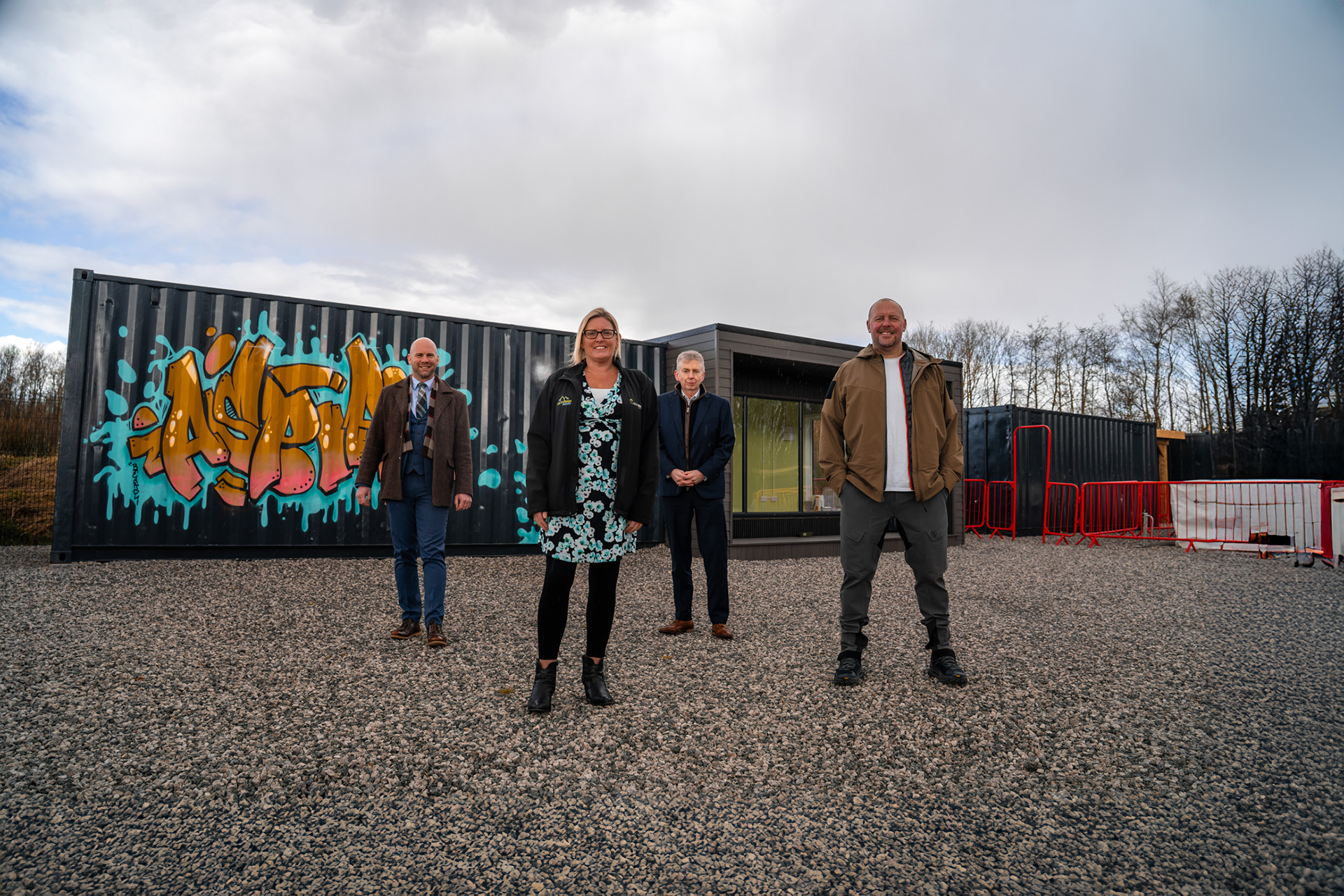
Aspire Academy aiming to transform lives

Aspire Academy

An exciting new venture, aimed at creating opportunities for students to access a construction qualification, is launching.

Our supply chain partner, William King Construction, has worked with West Cumbria Learning Centre and Time To Change (West Cumbria) Project to come up with the Aspire Academy – in the hope that this will have a long term positive impact on the local area.

Having been born and raised in West Cumbria, William King, and Rachel Holliday, from Time to Change, are both very aware of the issues facing the area.

The idea of the Academy was born when they visited West Cumbria Learning Centre to meet children who are excluded from mainstream school.

The headteacher there, Danny Gee, spoke passionately about how so many of his students want to work in construction and how collectively we have the opportunity to ensure that they leave school best placed to access the many and fantastic opportunities locally.

William spoke of the labour skills gap in West Cumbria and all agreed what was needed was a facility which is not strictly a classroom. Instead it is a real life building site where students, in small groups, can grow in confidence and skills, working with mentors in construction and who have faced challenges in their own lives.

Funding for Aspire Academy

Rachel applied for funding, from SPARK (a Sellafield-funded programme for social enterprise), to enable a business plan to be developed. Once this was in place she spoke to local funders and with support from Cumbria Community Foundation, Copeland Community Fund and LLWR, Aspire Academy became a brand new Community Interest Company.

The funding then enabled the space at Westlakes Science Park to be transformed and ready for opening, with assistance from landlords Britain’s Energy Coast (BEC).

The Aspire Academy is set to open its doors to a first intake of six students next week. The youngsters, aged between 14 and 16, will embark on work towards a BTEC course, with William King as their instructor, running one afternoon a week over 10 weeks.

William King, Rachel Holliday and Danny Gee are all Aspire Academy directors and will help to move the project forwards.

William said: “Having come from a West Cumbrian town with low expectations and very few GCSE’s myself, I can relate to some of these pupils through my own experiences during school years.

“I’m hoping to be able to connect with them and share the belief that we can influence some better patterns going forward.

“Success will see students attend Aspire and gain the skills they need to choose their future.

“By evidencing to these students that they can work in construction, there is a bright future for them and we will support them to overcome any barriers they face.

“We would like to see a constant stream of inspired young people leaving their place of schooling and joining the working world with a trade apprenticeship at Lakes College.

“We will be mentoring the children alongside the practical part of the course and giving them extra learning in construction related courses and assisting in things like interview techniques and CV writing.”

Looking to the future

They would like to expand the Academy further in the future to look at adult job seekers, upskilling and also open it up to other schools and adult groups in the area.

Danny added: “We hope to roll this opportunity out to schools who have students who are at risk of exclusion, and for whom a traditional mainstream curriculum does not always engage or meet their needs.

“If we can support students to remain in their mainstream school this would be a benefit all round.”

Morgan Sindall has also stepped forward to offer some construction-based courses to the students, while MKM Building Supplies, at Lillyhall, donated construction materials for the project.

But Will added that they would welcome more support going forward, either financial or offers of tuition help.

He added: “As we open the doors to our students we are looking to sustain the academy through sponsorship of each cohort of students.

“We are open to speaking to supply chain companies who would be willing to offer apprenticeships / work to students who have faced significant challenges in their lives.”

If you can help please contact Rachel by emailing Rachel.holliday@ttcwestcumbria.org