

In an industry where people and machinery operate side-by-side every day, reinforcing the importance of the People Plant Interface (PPI) Life Saving Principle is essential to keep us Knowingly Safe.
Recently, our Sellafield Product and Residue Store Retreatment Plant (SRP) project team paused operations for a Safety Stand Down, focusing on PPI, bringing together teams from across our supply chain to focus on staying safe around plant and equipment.
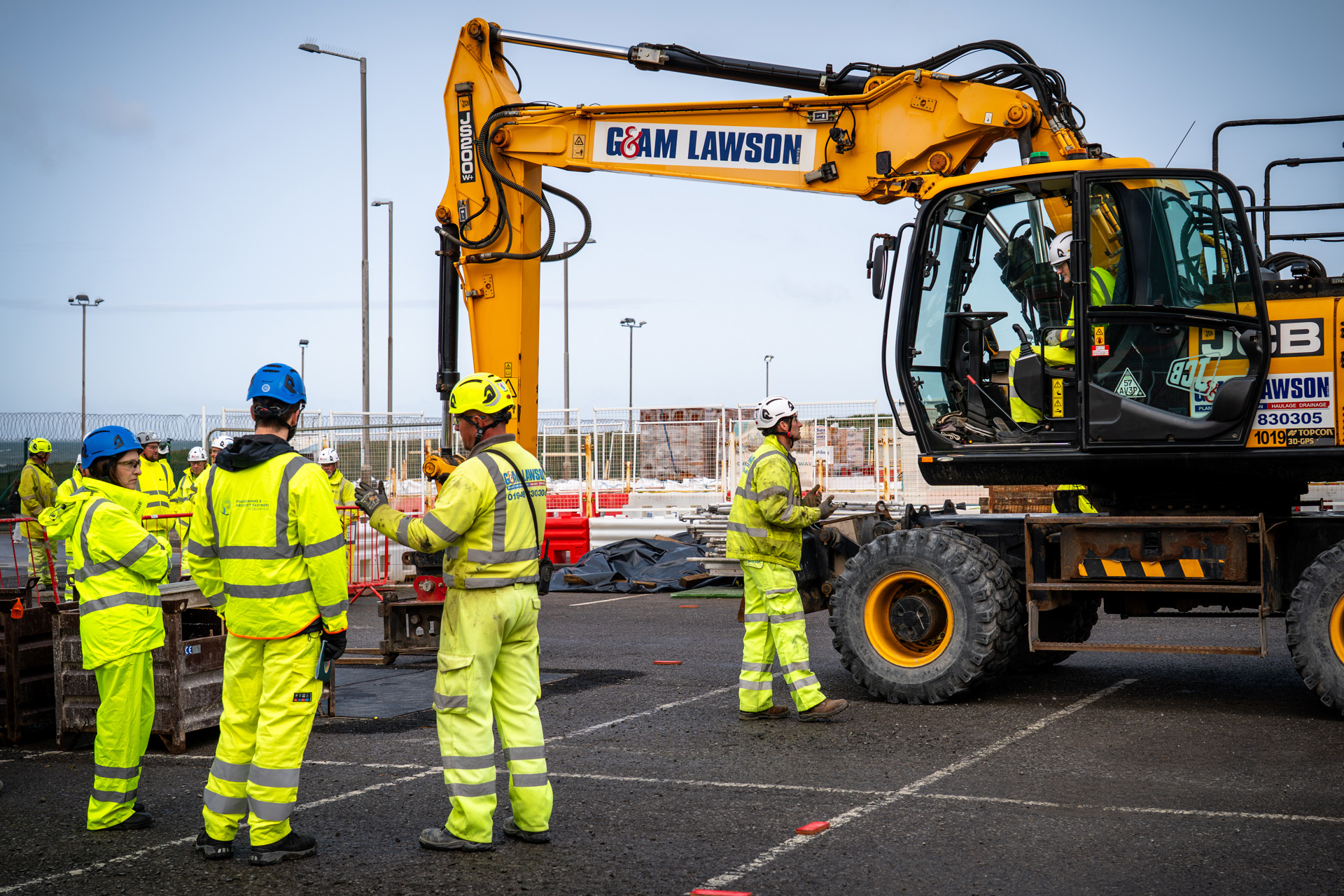
Companies across the project set up practical PPI stations, with live demonstrations of operations, showcasing systems, technologies, and behaviours used to manage and mitigate PPI risks, in line with our PPI campaign.
From spotter communication methods to proximity sensor demonstrations, each session offered hands-on, real-world insights into preventing harm where it matters most.
Andrew Lawson was demonstrating the Spillard PPI system which helps reduce plant-related risks by alerting both vehicle operators and personnel when they are in proximity to moving equipment.
He said: “The most important thing to me about PPI as a plant operator is people sticking to footpaths and not encroaching on work areas. People can sometimes come into areas that they don’t need to be in. Stick to the footpaths and you won’t come into contact with the plant.”
Contractor-led PPI stand down
Mark Atkinson, SRP health & safety manager, said: “To enhance site safety and operational understanding, the SRP People Plant Interface (PPI) Safety Stand Down was organised with a strong emphasis on being contractor-led, ensuring that the valuable expertise and real-world experience of our plant operators and contractors were at the forefront.
“The day focused on engaging directly with those who work daily with plant machinery, using their insights to identify key interface risks, share best practices, and develop practical solutions for improving safety around plant operations.
“Refresher training, demonstrations, and open-floor discussions allowed contractors to lead the conversation, demonstrating best practice whilst giving voice to those most affected by PPI challenges.
“Recognising the size and influence of our management team, we also arranged for a plant simulator to be positioned on site for two days. This provided non-operational staff with a hands-on opportunity to experience the challenges of operating heavy machinery within the constraints of a tight, live construction site.
“The simulator exercise significantly improved empathy and understanding of the spatial awareness, concentration, and skill required to operate plant safely in dynamic environments. This is understanding is key for safely planning future works.
“The Stand Down promoted collaboration, strengthened relationships between management and site teams, whilst reinforcing our commitment to safety through mutual respect and shared learning.
“I would personally like to thank everyone involved with the Stand Down.”
Close proximity working
Greg Doran, SRP SHE lead, added: “Following the Stand Down, the SRP leadership team took the opportunity to mandate close proximity working by exception only, for example, for specific and very necessary reasons and this will be implemented from 9 June.
“The reason for the mandate is to discourage people from defaulting to close proximity working initially; instead, we believe people and plant should be separated wherever possible.
“However, we also recognise that there will be exceptions where people and plant need to interface due to the nature of the task.”
Steve Harnwell, delivery director, said: “On busy construction sites, like SRP, where we are doing 5.2 million hours of high hazard construction work, one of the biggest risks to people is moving machinery, whether you are using it or are a pedestrian on the site.
“It’s important to follow our Life Saving Principle for PPI. We have segregated walkways to protect people from moving vehicles but, equally, if you are involved in the work, it’s important to follow the rules around the safety measures that we put in place.”