

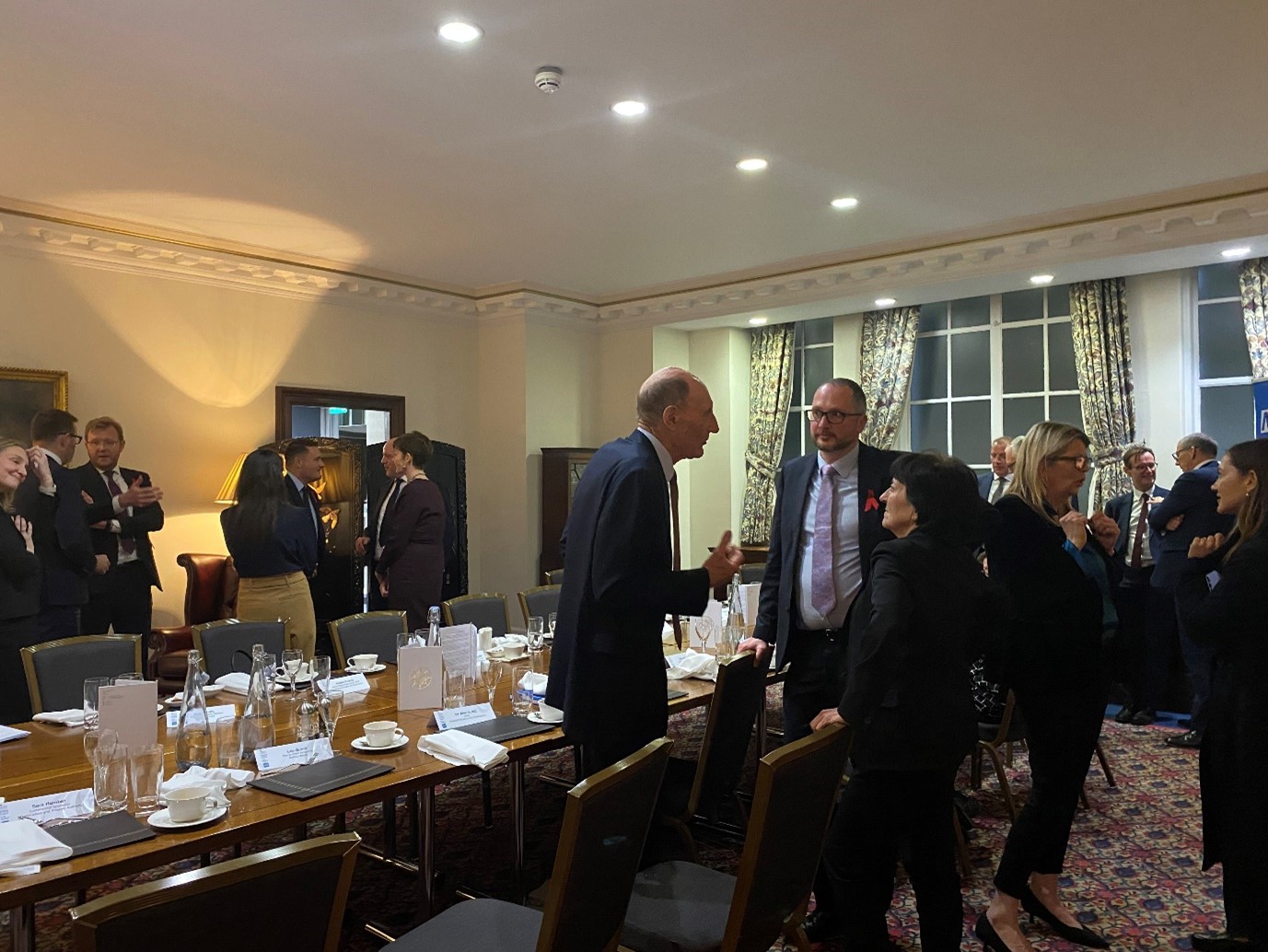
Last month, the New Hospital Programme (NHP) held an industry roundtable with The Rt. Hon. Wes Streeting MP, hosted by the Institution of Civil Engineers (ICE).
NHP invited the Department of Health and Social Care, NHS England, Infrastructure and Projects Authority (IPA), National Infrastructure Commission, as well as senior leaders from industry. NHS England provided context to the discussion by sharing the potential of NHP to drive efficiency through the development of its clinically-led, Hospital 2.0 approach.
Key topics were explored in the context of the long-term NHS plan, providing valuable feedback from industry experts to inform the ongoing development of NHP’s upcoming Industrial Strategy.
Here are some of the key points guests raised on the night:
1. What makes hospital builds attractive to the market and what does industry need from NHP and government?
We heard how funding security and a committed pipeline are essential, as well as investment in skills and capabilities, with the ability to import talent and expertise.
Approvals and governance processes need to be efficient.
We heard about the importance of collaboration and working in partnership to deliver, and the need for NHP to rebuild confidence and trust with the market. Support is needed from the Government to pursue ‘different’ commercials models, supported by certainty and stability, with the removal of the ‘stop/start’ culture.
2. How should the market be engaged to deliver industrialised solutions, and what is the role of the NHP and wider government in encouraging this investment?
Standardisation is key as it will create capacity in manufacturing without the need to build more factories. We need to ‘Go slow, to go fast’, get it right and then avoid change with control from the centre. There is also an opportunity to disperse prosperity by targeting geographical areas to increase manufacturing capability.
3. These hospitals will only work as part of a system enabled by digital solutions. What is needed for the NHP to be a genuine catalyst for change?
Government procurement cycles don’t match the pace of technology. We need to protect the front door of the hospital by minimising the number of people needing to use the facility and help clinicians. Patient technology should be used to humanise the experience, and patient data safety must be protected. We also discussed how smart buildings have the potential to save on operational spend.