Celebrating NHP Apprentices

We are thrilled to support National Apprenticeship Week (NAW) and shine a light on our inspirational apprentices gaining skills for life in the New Hospital Programme.

NAW is part of the Department for Education’s ongoing #SkillsforLife campaign which is engaging young people, adult learners, and employers with government skills and training programmes, building the foundations for an enduring national capacity.

Gracie Quinn applied for a number of apprenticeship schemes and successfully secured a role with NHS University Hospitals of Liverpool Group as part of the project support team in the NHP. Since starting, Gracie achieved a Level 3 Business and Administration qualification, providing her with transferable skills for her next role at the Integrated Care Board (ICB).

Louis Brown is an Apprentice Surveyor for NHP. Louis worked in the construction industry prior to starting his apprenticeship and was introduced to colleagues in construction management, who were supportive in signposting Louis to relevant apprenticeship schemes.


Visit NHP Linkedin page for more details.

For information on how to hire an apprentice visit www.apprenticeships.gov.uk/employers

NHP launches Hospital 2.0 Alliance procurement process

The New Hospital Programme (NHP) has launched the formal procurement process for its Hospital 2.0 Alliance framework.

This strategic, long-term, multi-supplier framework agreement will be used by Trusts across the country to appoint Alliance Partners who will provide the detailed design, construction and handover of individual new hospital schemes between 2025 and 2040.

The Selection Questionnaire (SQ) process will run until early May 2025, when suppliers will be shortlisted. The tender process will run until Autumn 2025 with places on the framework expected to be awarded towards the end of the year.

Companies intending to bid for a place on the framework should visit:  https://www.find-tender.service.gov.uk/Notice/004765-2025?origin=SearchResults&p=2

In addition, NHS England will launch its ProCure24 framework with Crown Commercial Service to support the wider NHS Estates and Facilities work beyond the New Hospital Programme. We’re excited to bring this to market in 2026.

Morag Stuart, Chief Programme Officer at the New Hospital Programme, said:

“This is a significant milestone that reiterates the government’s commitment to the programme and will give industry confidence that delivery of NHP is proceeding at pace. We know that our future supply chain is eager to join us on our journey to transform the way we deliver healthcare infrastructure in the NHS.

“We recognise the need to build long-term, collaborative relationships with our supply chain to ensure that we drive improvements in productivity throughout each wave of investment, and the benefits of the programmatic approach are realised. That’s why our Hospital 2.0 Alliance approach is underpinned by values of partnership and collaboration.”

Rick Lennard, Executive Commercial Director at the New Hospital Programme, said:

“The Hospital 2.0 Alliance has been designed to provide fair and equitable commercial terms and conditions needed to unlock the supply chain’s commitment to the sector, and the investment required to create enduring capacity and capability needed to build our country’s next wave of hospitals.”

“We are confident that creating this collaborative, enterprise approach with industry will ensure NHP achieves economies of scale, reduces uncertainty, mitigates critical supply constraints created by the scale of concurrent scheme delivery, and supports wider UK economic growth.”


Background

In January 2025 the Rt Hon Wes Streeting MP, Secretary of State for Health and Social Care, launched the NHP Plan for Implementation. This confirmed that NHP would be backed by up to £15b of investment for each five-year spending period, averaging £3b a year by 2030.

The plan confirmed that 16 schemes would start construction between 2025 and 2030, including seven sites constructed primarily with reinforced autoclaved aerated concrete (RAAC) which were already proceeding at pace due to the substantive safety risks to staff and patients. To find out more, please click here.

NHP Industry Bulletin – January 2025

Welcome to our January edition of the New Hospital Programme (NHP) Industry Bulletin. 

Go to this Sway

If you cannot access the bulletin via the link above, download a copy here:  Click here for a PDF copy

If you haven’t already, register your interest in the programme and receiving updates via email, by filling in our Survey:  New Hospital Programme – Supply Market Survey

If you have any feedback on the Industry Bulletin or if there are any topics of interest for future bulletins, please contact our Supply Market Management team at nhp.suppliers@nhs.net

Government announcement on review of New Hospital Programme

The Rt Hon Wes Streeting MP, Secretary of State for Health and Social Care, has today made a statement in the House of Commons about the New Hospital Programme.

He set out the outcome of the review into the programme that was carried out last year, and announced that an NHP Plan for Implementation has been published. You can read the plan here: New Hospital Programme review outcome – GOV.UK. It includes current expectations for delivery of schemes, and cost estimates, based on current assessments as of January 2025, following the review into the NHP and agreement to 5-year waves of investment.

A letter to industry has also been published: 20250120 NHP Letter to Industry

If you have any queries about the announcement, please reach out to nhp.suppliers@nhs.net

Hospital 2.0 Alliance

The New Hospital Programme continues to progress plans to establish a partnership with main works contractors to support delivery of the programme. To date this has been referred to as the Main Works Partnership (MWP).

As we look to launch the formal procurement process, we are renaming this partnership to reflect the collaborative, enterprise approach that the NHP Agreement and commercial strategy will create. It will now be known as the Hospital 2.0 Alliance.

The NHP Agreement will similarly be known as the Hospital 2.0 Alliance Agreement.

These changes are in name only with no changes to the principles of the Agreement or commercial strategy, or the substance of any documents shared to date, as a result.

We are awaiting government approval to launch the procurement and this is in the final stages of approval with Cabinet Office. We currently expect to be able to launch the SQ in the coming weeks. Please look out for further communication from us next week on the outcome of the government review into the New Hospital Programme.

If you have any queries, please contact nhp.suppliers@nhs.net

Secretary of State Industry Roundtable: highlights from the discussion

Last month, the New Hospital Programme (NHP) held an industry roundtable with The Rt. Hon. Wes Streeting MP, hosted by the Institution of Civil Engineers (ICE).

NHP invited the Department of Health and Social Care, NHS England, Infrastructure and Projects Authority (IPA), National Infrastructure Commission, as well as senior leaders from industry. NHS England provided context to the discussion by sharing the potential of NHP to drive efficiency through the development of its clinically-led, Hospital 2.0 approach.

Key topics were explored in the context of the long-term NHS plan, providing valuable feedback from industry experts to inform the ongoing development of NHP’s upcoming Industrial Strategy.

Here are some of the key points guests raised on the night:


1. What makes hospital builds attractive to the market and what does industry need from NHP and government?
We heard how funding security and a committed pipeline are essential, as well as investment in skills and capabilities, with the ability to import talent and expertise.
Approvals and governance processes need to be efficient.
We heard about the importance of collaboration and working in partnership to deliver, and the need for NHP to rebuild confidence and trust with the market. Support is needed from the Government to pursue ‘different’ commercials models, supported by certainty and stability, with the removal of the ‘stop/start’ culture.

2. How should the market be engaged to deliver industrialised solutions, and what is the role of the NHP and wider government in encouraging this investment?
Standardisation is key as it will create capacity in manufacturing without the need to build more factories. We need to ‘Go slow, to go fast’, get it right and then avoid change with control from the centre. There is also an opportunity to disperse prosperity by targeting geographical areas to increase manufacturing capability.

3. These hospitals will only work as part of a system enabled by digital solutions. What is needed for the NHP to be a genuine catalyst for change?
Government procurement cycles don’t match the pace of technology. We need to protect the front door of the hospital by minimising the number of people needing to use the facility and help clinicians. Patient technology should be used to humanise the experience, and patient data safety must be protected. We also discussed how smart buildings have the potential to save on operational spend.

NHP Industry Bulletin – December 2024

Welcome to our first edition of the New Hospital Programme (NHP) Industry Bulletin. 

Go to this Sway

If you cannot access the bulletin via the link above, download a copy here:  Click here for a PDF copy

If you haven’t already, register your interest in the programme and receiving updates via email, by filling in our Survey:  New Hospital Programme – Supply Market Survey

If you have any feedback on the Industry Bulletin or if there are any topics of interest for future bulletins, please contact our Supply Market Management team at nhp.suppliers@nhs.net

New Hospital Programme South West Meet the Contractor Event

In November, over 170 businesses, including 68% small and medium-sized enterprises, met in Plymouth to hear about plans for future healthcare infrastructure delivery of the Women and Children’s Hospital in Truro and Derriford Emergency Care Hospital in Plymouth, and the local skills and employment opportunities these projects will provide in the South-West of England.

Through presentations and networking, participants met with representatives from New Hospital Programme (NHP), University Hospitals Plymouth NHS Trust, Royal Cornwall Hospitals NHS Trust, Willmott Dixon, Cornwall Construction Skills Advisory Forum and Building Plymouth.

NHP has the potential to provide work to thousands of businesses, big and small, from across the UK over several years. Today’s event is part of our ongoing programme of engagement to ensure that firms across the UK get ready to bid for work and put themselves in the best position possible to be successful.

Speaking about the event, NHP’s Chief Programme Officer, Morag Stuart, said:

“These projects are at the forefront of transforming the country’s future hospital delivery. We want to build a collaborative supply chain that will deliver hospitals faster and at less cost – as well as an enduring capability to build hospitals far into the future. Connecting a wide variety of companies across the South-West and beyond is key to the programme’s success.”

You can view the slides presented at the event in the links below:

Article: 3 reasons why we need to work together to deliver the hospitals our people deserve

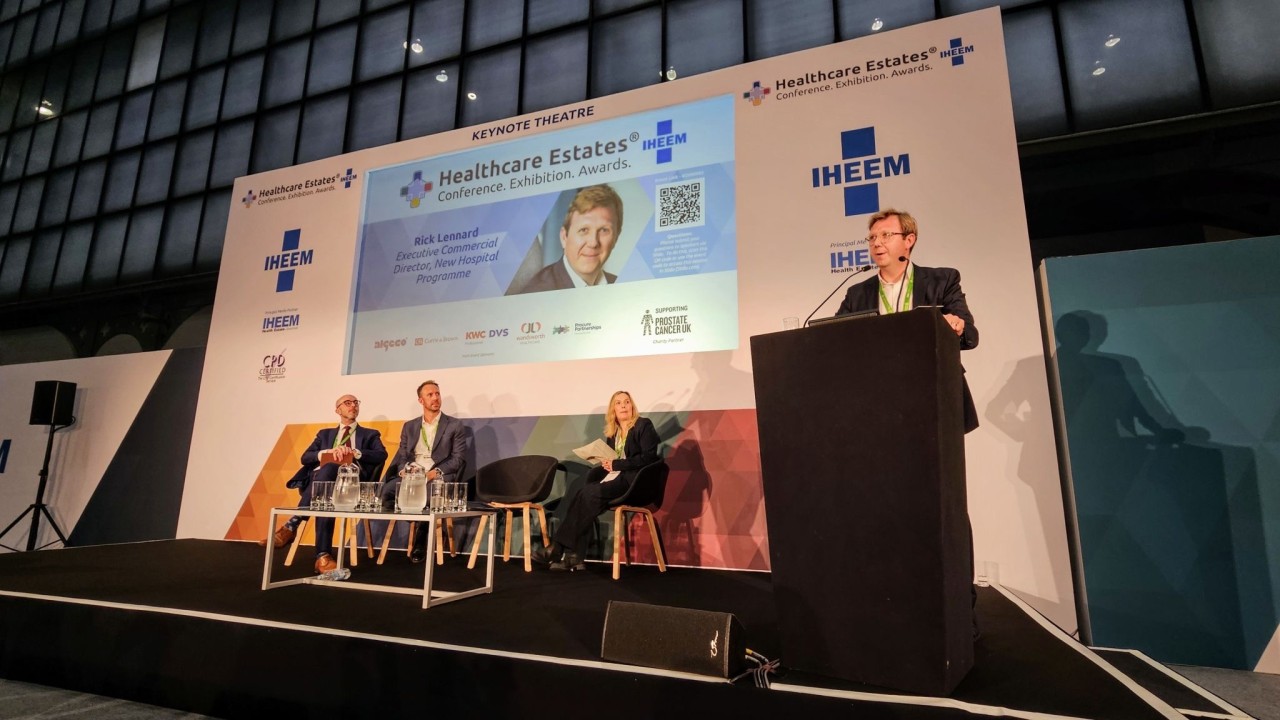
An insightful piece from our Executive Commercial Director, Richard Lennard, following his experience as a speaker at IHEEM last week!


I’ve only been working in the NHS for 7 months and what astounds me is the opportunity we have here on the New Hospital Programme (NHP) to do something really special.  We have an opportunity to build new hospitals that are fit for purpose, for the future, and to make them the best they can be – so that they become ‘the hospitals our people deserve’.

Yet, for the programme to be truly successful it is vital that we bring together all of the right people – from the DHSC, NHSE, the Trusts, suppliers, industry bodies, skills bodies, local communities and many more – and that we work together, in partnership towards our shared goals.  Here are three reasons why:

1.         This programme is really complex – it’s big, it’s national.  It clearly has some risks, but far more opportunities

NHP is a national, publicly funded organisation and it is one of the largest infrastructure programmes in the UK – if not ‘the’ biggest.

The thing that makes this programme unique is that I can’t think of another programme that has multiple locations dotted all over the country AND multiple clients (in our case, Trusts) working together as a national team.

Given this, there are some obvious risks – the most obvious one relating to supply chain capacity constraints, however I see so much opportunity.  Our programme is an opportunity to attract people – from within and from outside our sector.  It will touch thousands of organisations, whether that be organisations supporting and supplying to it, or individuals that live in locality who run businesses that will benefit from the hospitals.

2.         Transformation is at the heart of everything we do, and everyone will play a role in that in one way or another

NHP represents a dramatic shift from traditional, siloed ways of hospital building. We have a unique opportunity to transform the way hospitals are designed, procured, and constructed.

We want to look back on our work in years to come and to have achieved the following outcomes:

–  Enhanced patient experience

–  Improved clinical care

–  Improved workforce wellbeing and efficiency

–  Use of latest digital technologies

–  Delivery of green, sustainable hospitals

–  Integration with local communities and the wider health system

However, we can’t deliver this alone.  The Trusts are our partners in delivery and we are also focused on creating the right industry partnerships to achieve success.


3.         We’ve definitely had some early successes but the real prizes are yet to come

We’ve had our early wins – to name a few: the Dyson Cancer Centre is a new hospital which has opened to patients, and last week Midland Metropolitan hospital opened its doors – the team have done a fantastic job, despite numerous setbacks over the years.

Looking ahead, there are three key roles at tier 1 of the supply chain: the Programme Delivery Partner (expected to be awarded in Q4 2024); Main Works Partnerships (SQ launch expected in Q4 2024); and Digital Partner contracts.  These tier 1 contracts will lead to thousands of opportunities further down the supply chain for businesses of all types and sizes and from many sectors, over a number of years.

Our priority is to build a supply chain that delivers efficiently, to a high quality, collaboratively and sustainably.  We want to create long term collaborative relationships with our main works partners, where we focus on outcomes and reward performance.

Ultimately, we want to create an environment where we are focused on getting everything right for the first patient – that is what’s important to us and how we will measure our success.  To achieve this we have to bring together all of the people, innovation, and skills we need in a way that adds up to something bigger than the sum of its parts.  That is the opportunity NHP presents and that is how we will deliver something truly transformational.

Article: Working with the market to deliver NHP

An insightful piece from our Director of Markets and Supply Chain, Emma Whigham.


It was great to talk to so many suppliers at the IHEEM Healthcare Estates Conference on Tuesday in Manchester and see the growing interest and excitement there is in the industry for the New Hospital Programme (NHP).

Many businesses told me that they were interested to hear more about what we are looking to achieve on NHP and to find out about how we are engaging with the market to shape our commercial approach.

The NHP is currently one of the largest infrastructure programmes in the UK and arguably one of the most important.  We have a significant and essential opportunity to transform the way we deliver healthcare infrastructure for the NHS.

I can personally give testament to the difference a new facility can make – I grew up in the South side of Birmingham where we used to have the old Victorian hospital in Selly Oak but now, we have the modern Queen Elizabeth Hospital in Edgbaston.  This change has made a huge difference – we went from having something dark, with paint peeling off the walls and small hospital rooms to something light and airy!

Our Commercial Strategy has so far been focused on the biggest contracts we need – the Programme Delivery Partner and Main Works Partner contracts.  These are close to completion and close to starting procurement respectively.

However, our market analysis has gone so much further than this and has come across a broad spectrum of challenges across the supply chain to deliver these hospitals.  This analysis helps us to determine where to focus our efforts – so that we concentrate on the things that make the biggest difference.

As an example – it will not come as surprise that MEP makes up a massive proportion of hospitals (we estimate 35-40% of the delivery cost of a hospital is MEP for NHP) and so poses a significant risk to delivery.  We know that there is a capacity gap for what we want to deliver (due to a shortage of skills and labour, bespoke ways of doing things, not enough offsite activity etc). We also recognise that strong relationships exist between Main Works Contractors and their MEP suppliers.  So, any solutions we develop must take account of these factors.  We’ve been working with Main Works Contractor and MEP suppliers to understand this and develop the right commercial approach.

Other priority areas in the Tier 2 and 3 markets where we have identified challenges include facades and common components. We are engaging with these supply chain markets to test our procurement and commercial approaches in these areas too.

But once the risks are identified, how do we plan to intervene in order to mitigate them?

Here are just some of the critical interventions that will help us to significantly mitigate risks and have broader benefits:

· Regional supply chain strategies:

We recognise that no one part of England is the same.  For example, the challenges in the South West are different to the Midlands, East and North).  We need to identify and focus on what makes success at local level – smoothing potential bottlenecks and regional supply chain shortages whilst also enabling on time delivery for construction.

· Prototyping:

Hospital 2.0 is our platform for delivery for delivering hospitals for the future.  It is our standard design kit, set of rules, processes and the building blocks for delivering hospitals.  It is built upon solid foundations but contains new (and in some cases untested in this scenario) elements.  We are looking at how we test the novel aspects and work with different parts of the market to prototype different parts.

Look out for more information on Hospital 2.0 in a future blog.

As we approach the start of the Main Works Partners procurement, we are focusing our efforts on those parts of the supply chain that are very important to us in the delivery of hospitals – and we’ve seen from other programmes that the small and medium sized enterprises at the lower tiers of the supply chain are often critical to deliver a programme of this size.

There is a lot more work to do – and we plan to continue to engage extensively with the market. But we are confident that our work identifying challenges, mitigating risks and shaping the market will put us in the best possible position to deliver this transformational and critically important programme.